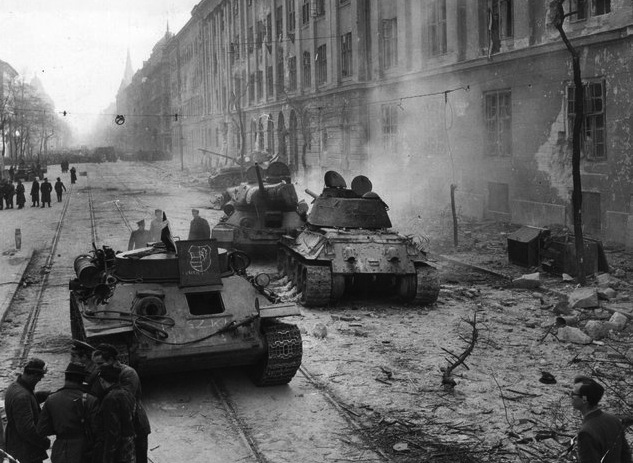
“Having brilliantly documented the horror of Stalin’s Soviet terror machine in her Pulitzer Prize-winning Gulag, author Anne Applebaum now offers a bulky sequel, Iron Curtain, about the brutal effort of that same machine to crush and colonize Eastern Europe in the first decade after World War II. Her evidence, once again drawn from archival research and some survivor interviews, is overwhelming and convincing. But the heart of her story is hardly news.” >review & photo (c) NYT, 2012
Archive for Central Europe
Stalin’s Shadow
Posted in Uncategorized with tags Anne Applebaum, Central Europe, Communism, Eastern Europe, histroy, Iron curtain, Joseph Stalin, Soviet Union, World War II on 18 January 2013 by delclem“The Tragedy of Central Europe” (1945-1989)
Posted in Uncategorized with tags Central Europe, Communism, Czech Republic, essay, France, Lund, Milan Kundera, Russia, Soviet Union, Sweden on 19 December 2012 by delclem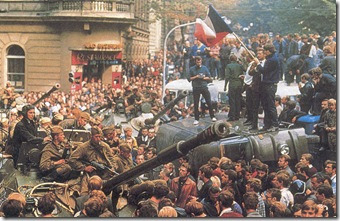
On Milan Kundera‘s seminal and problematic, ie. almost racist,
essay from 1984 >text (c) EUROPEAN STUDIES IN LUND, 2010
“A Requiem for Europe’s Worst Prejudices”
Posted in Uncategorized with tags Central Europe, Czech Republic, gypsies, Music, Prague, prejudice, Riccardo Sahiti, Roma on 3 December 2012 by delclem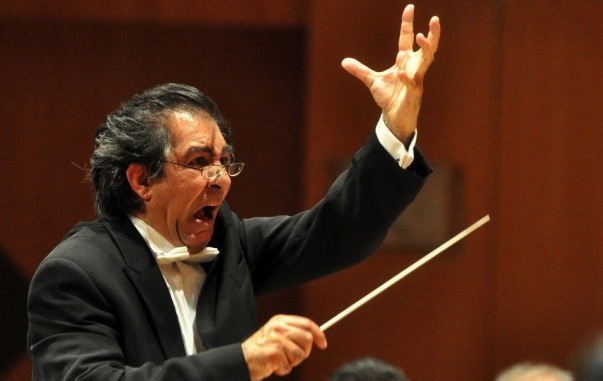
“The concert is sold out, and Maestro Sahiti’s appearance is met with a long round of applause. On the podium, he looks the musicians in the eyes, smiles, and they smile back. Nearly 10 years ago to the day, Sahiti founded the Roma and Sinti Philharmonic. It started out as a small project, which was hardly taken seriously. Now Sahiti stands before 60 musicians, from Germany, Romania, Hungary. All the orchestra members belong to the ethnic minority called Roma or Sinti: Gypsies; some of them have been abused, others bullied. At the Rudolfinum, they are playing for the public, but also for themselves – and against centuries of stereotypes.” >full text (c) SZ / Wordcrunch.com 2012
Continent of Corruption
Posted in Uncategorized with tags Austria, Central Europe, corruption, Czech Republic, Germany, Hungary, Italy, politics, Slovakia on 17 April 2012 by delclem
Bribes as the Lubricant of Neoliberal Central Europe
Let’s be honest: the center of Europe is not just the region of phony Habsburg nostalgia and a shared cuisine. It is also the place where experienced patients hand over a box of chocolates (with a creatively hidden banknote) to the treating doctor and/or the nurse. Continue reading
“The Suffering Olympics”
Posted in Uncategorized with tags Central Europe, genocide, Hitler, Holocaust, memory politics, Soviet Union, Stalin on 2 February 2012 by delclem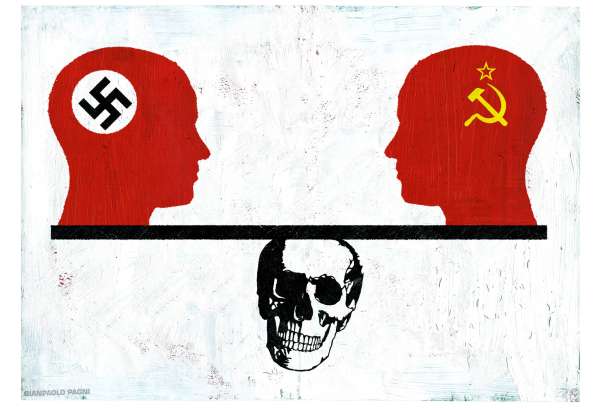
“The ‘double genocide’ wars that pit Stalin’s crimes against Hitler’s are raging in wide swathes of Europe and every now and again along comes a gust from the past to stoke them.” Commentary by Robert Cohen (c) NYT, 2012; illustration by Gianpaolo Pagni.
Belfast “peace walls”
Posted in Uncategorized with tags Belfast, Central Europe, peace wall, photos, sectarian violence on 24 January 2012 by delclem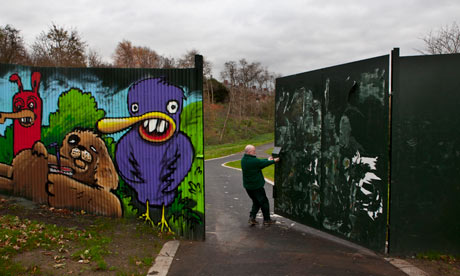
Belfast is probably the most “Central European” place on the Isles…
“Antonio Olmos photographs the walls built across Northern Ireland’s capital city as a means of defusing sectarian tension. There are 99 of them, dividing nationalist Catholic neighbourhoods from loyalist Protestant ones. Some of the walls date from the early years of the Troubles, but an estimated one-third have gone up since the IRA ceasefire in 1994. Now, ‘peace gates’ are being opened in some walls in an attempt to foster greater links between communities.”
(c) THE GUARDIAN/OBSERVER, 2012
> SLIDE SHOW (photos)
Here comes the “Christkind”
Posted in Uncategorized with tags Austria, beliefs, Central Europe, Christkind, Christmas, folklore on 24 December 2011 by delclem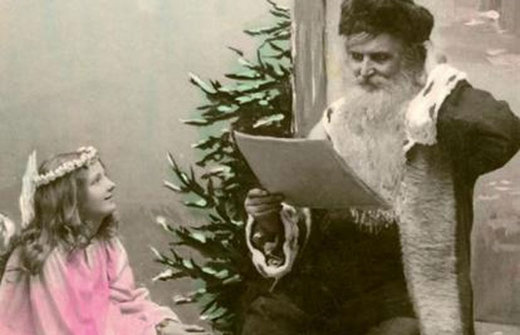
Umberto Eco: “People are tired of simple things”
Posted in Uncategorized with tags Central Europe, Czech Repulic, Italy, Literature, Prague, review, Silvio Berlusconi, Umberto Eco on 2 December 2011 by delclem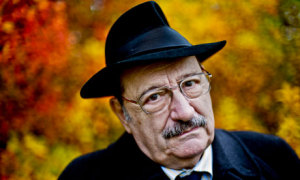
The author of The Name of the Rose on why it is human to lie, how Berlusconi has used conspiracy theories to stay in power – and Eco’s love/hate relationship with his most famous book. With a link to a review of his recent novel The Cemetery of Prague (c) THE GUARDIAN, 2011
Central European Castles in the Air?
Posted in Uncategorized with tags Central Europe, cultural analysis, essay, Tomasz Kamusella on 1 December 2011 by delclem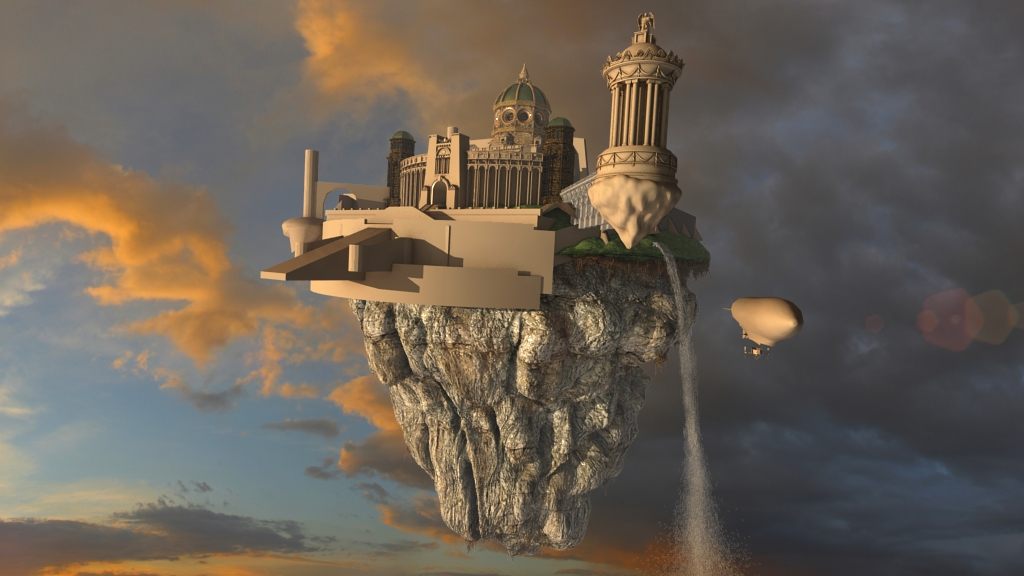
“Looking at Central Europe askance, asking where on earth it may be, and why its inhabitants may wish to preserve their Mitteleuropäisch-ness. Maps are the answer, or are they?” Historical analysis by Tomasz Kamusella, St. Andrews
Essay (c) Kakanien revisited, 2011
Illustration (c) Felix Hörlein & Fabian Hofmann, Munich.