was a product of Habsburg Central Europe himself,
with Polish-Dutch and other roots…

Article (c) wieninternational.at, 2011
was a product of Habsburg Central Europe himself,
with Polish-Dutch and other roots…
Article (c) wieninternational.at, 2011
Places like Theresienstadt (above) or Auschwitz show how connected the Habsburg heritage and the Nazi era are in Central Europe. In some cases, like in Western Ukraine (Galicia), the Austro-Hungarian past even seems to be the prehistory of genocide.
Photos (c) Ruthner, 2011
On 16 – 17 June the Royal Historical Society (RHS) Symposium Edges of Europe: Frontiers in Context was held at Lancaster University.
The Plenary Lecture entitled Acoustic Postcards from the Edges of Europe was given by Professor Michael Beckerman, Head of Music at New York University.
 His research interests include Czech and Eastern European music, Janacek, Dvorak, Martinu, nationalism, Gypsies, Mozart, Brahms, Gilbert and Sullivan, Schubert, and film music.
He received the Janacek Medal from the Czech Republic and is a Laureate of the Czech Music Council. He lectures widely and writes regularly for the New York Times.
Here you can view a video of his talk.
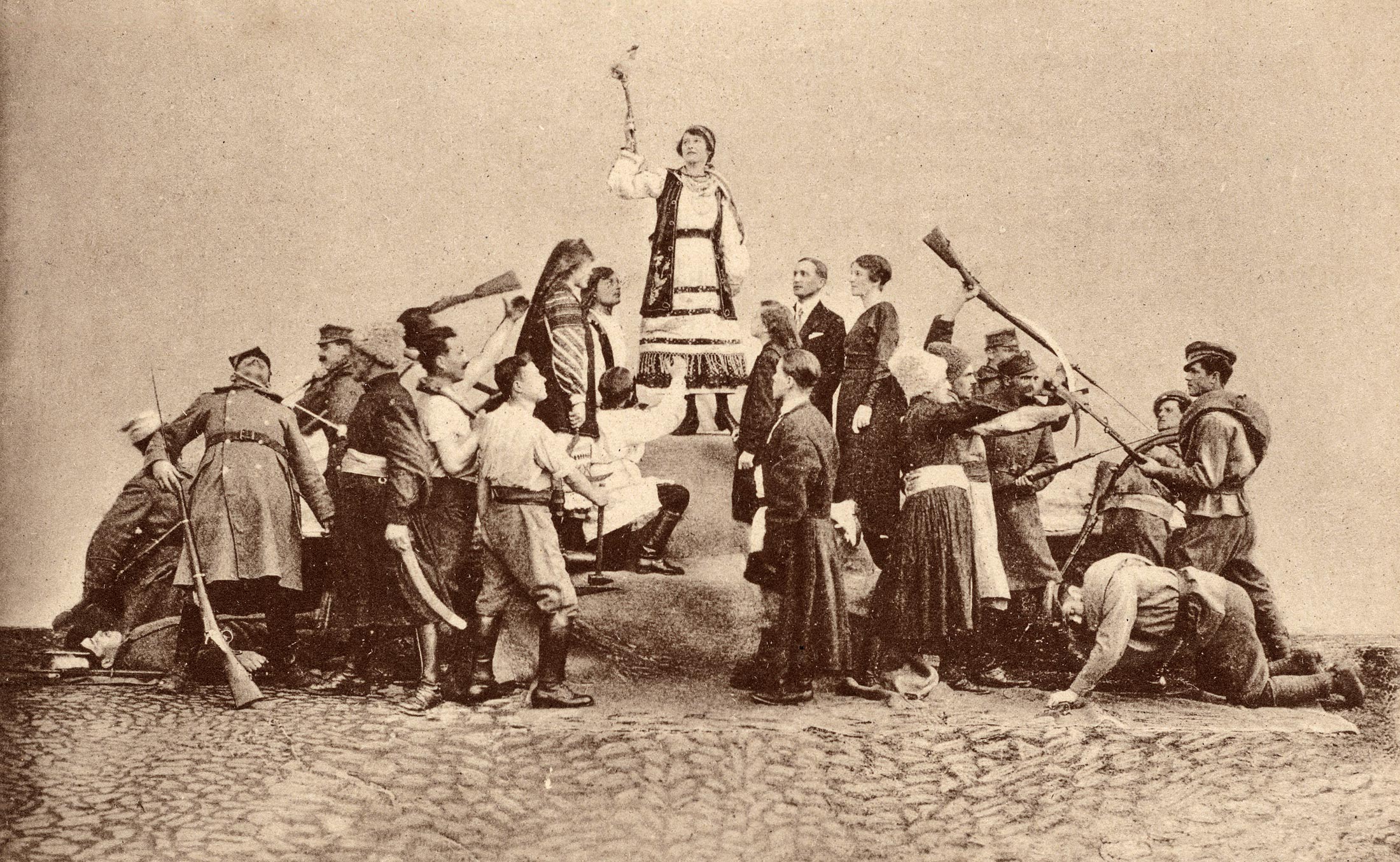
An old friend of mine has pointed out that in many countries (e.g. Canada), multiculturalism is misunderstood as multi-nationalism. According to him, each *nationality* within a multi-ethnic society constructs their little cultural backyard, an allotment garden as it were, with hedges and garden gnomes. *Multikulti* then is a mere pretext for cultural segregation and *living out* your prevailing cultural narratives (one of the most polemic examples: Islamist attempts to introduce Sharia into western judiciary) without caring too much about the others and their cultures. Continue reading
 > GERMAN VERSION
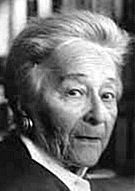
The idea is not really new. ‘Postcolonial approaches’ to the late Habsburg Monarchy are already to be found in Robert Musil’s famous novel Der Mann ohne Eigenschaften (“The Man Without Qualities”), and we can find instances of such a view with other contemporary observers as well, such as the Viennese art historian Hilde Zaloscer. Born in 1903 to a middle class, German-speaking Jewish family in Banja Luka, Bosnia, Zaloscer and her family fled to Vienna after the First World War, and then, in 1938, further to Alexandria, Egypt.
In her autobiography entitled Eine Heimkehr gibt es nicht (“There’s No Coming Home,” Vienna 1988), she repeatedly compares her “happy childhood days […] ‘on a volcano’”* with her Egyptian exile which at the time was de facto still under colonial rule:
“Basically it was the same constellation as in Bosnia before the First World War. There, too, a foreign ethnic group – in this case, the Austrians – in a country appropriated through violence, kept the people at an educationally inferior level by means of skillful politics.” (p. 129)* Continue reading
BBC documentary (1995)
Do you know Labskaus? It’s the traditional sailor’s food north of Hamburg: a stodge of beef, beetroot, pickles, onions, herring, and potatoes, all cooked and then squeezed through a meat grinder. Haters of this dish – because of its gross appearance – compare it to vomit, half digested and then spat out. Those who have got used to the vague taste of it praise Labskaus to the skies as a delicacy.
A mishmash of fish and meat: that’s also how globalization is understood by its opponents. People in favor, however, love to compare it to the nifty evening buffet, where everyone takes what s/he wants (and needs?): sushi, dumplings – plus a bit of Dal, the traditional Indian lentil dish.
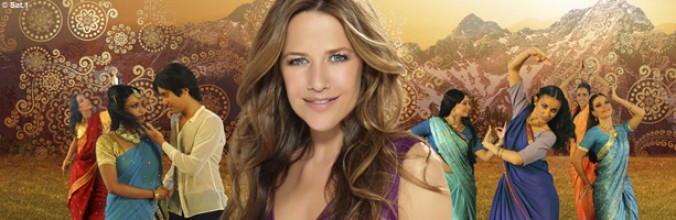
This brings us back to Central Europe, where recently an unprecedented German-Austrian film experiment was televised (with Indian spices): Bollywood lässt Alpen glühen (‘Bollywood makes the Alps glow’) is the latest stroke of genius in German commercial TV for which, as we know, Continue reading
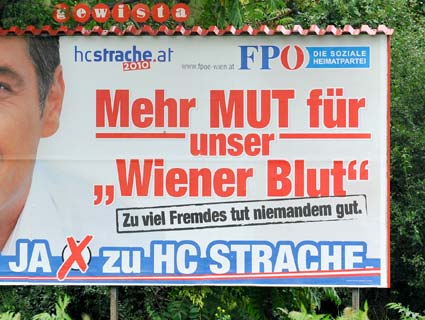
The Austrian Freedom Party (FPÖ) took the liberty of placing an overtly racist poster in Vienna for the City Council elections on 10 October, bearing the slogan: Mehr Mut für unser Wiener Blut (‘More courage for our Viennese Blood’). This is in many ways instructive for hopeless cultural analysts like me who are interested in vampirism as well.
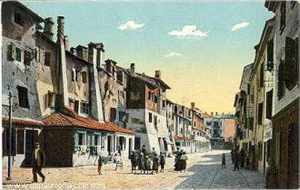
On summer days like this, I sometimes return to Grado, the old Adriatic resort of my childhood. It is still populated by Italian, Austrian and German tourists, and increasingly Hungarians and Czechs, and it smells nicely of pine, sea, foreign cleaning products and Aperol-Spritz. Then I sometimes think of Kakanien, whose ghost is somehow even more tangible here than in Vienna or Prague. At least during the summer.
‘Kakanien’: this is Robert Musil’s word for the ‘k. & k.’ Habsburg monarchy. It sounds a bit anal for Slavic ears, but maybe this was intended, as Joseph Roth claims. Anyway, it is this term by which the author of The Man without Qualities, probably the best novel on this planet, referred in an affectionately ironic way to Austria-Hungary-Bohemia-Moravia-Silesia, including Slovakia, Slavonia, Slovenia, Transylvania, etc. etc.: in a word, the huge land of unlimited impossibilities that perished in 1918.
A semi-colonial state in which a dozen ethnic groups lived side by side and made each other’s lives difficult. Socially and politically disastrous, but culturally fruitful: a twelve-tone waltz under the volcano called World War I, orchestrated by Freud & Co. A ‘prison of peoples’ in the eyes of the ardent nationalists of the time, a ‘powder keg’ for historians, and a Continue reading

