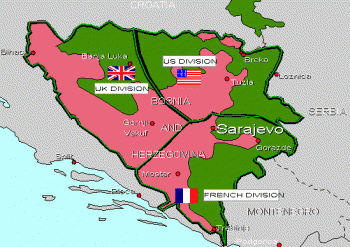
> article (c) Balkan Chronicle, 2011
> other postings on Srebrenica

“There’s a new Brown book out this weekend, however, that may test the tolerance of those whose affection for Brown starts and ends with his illustrated biography of Métis leader Louis Riel. Called Paying for It, the “comic-strip memoir” tracks Brown’s sexual adventures in the past 12 years with more than 20 female “escorts” in Toronto. Smart, unflinchingly honest, frequently funny, occasionally charming – and chock-full of nudity.” Article by James Adams (c) THE GLOBE & MAIL, 2011
Alfred Kubin and his 1909 novel Die andere Seite
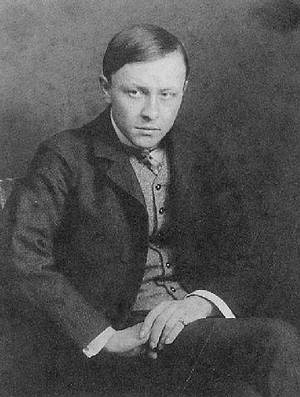
Biographic loss & the fantastic in art
Kubin, whose father was a land surveyor, was born in Leitmeritz (Litoměřice), Bohemia, in 1877. He spent his early days in Salzburg and Zell am See, Austria. In 1887 his mother died. From 1892-96 he was a photographer’s apprentice in Klagenfurt. Then he started studying Fine Arts in Munich in 1898 and dropped out again in 1899. However, Kubin remained in the Bavarian capital and joined the local art scene. His father died in 1908.
After seeing Max Klinger´s series of etchings entitled Paraphrase über den Fund eines Handschuhs (“Paraphrase on the Finding of a Glove“) in 1899, the young artist lived through a veritable creative frenzy, an “invasion of black and white visions” which lasted until 1903. He soon acquired a reputation for being a graphic artist and book illustrator specializing in uncanny, grotesque and allegorical subjects. “I am the organizer of the uncertain, hermaphroditic, shadowy, dream-like,” he wrote in a letter on 9 January 1908.
Review by Maria Popova
(c) brainpickings, 2011
As Post-Modernism’s star wanes, Andrew Thacker observes, a diverse,
multivalent Modernism is drawing fresh scholarly attention > article
(c) Times Higher Education, 2011.

When your hair stands on end under the royal colander
In the summer, when nothing but the bad weather can really shake people, three memorable events occurred in the schnitzel-shaped heart of Europe. Their structure is basically the same: they are all about how groups should be represented in a democratic society where the desperate longing of some can be simply annoying to others. Culture, as we have learned from theorists like Stuart Hall, is always a “struggle for meaning.”
More videos & texts (c) THE GUARDIAN, 2011 > LINK
Places like Theresienstadt (above) or Auschwitz show how connected the Habsburg heritage and the Nazi era are in Central Europe. In some cases, like in Western Ukraine (Galicia), the Austro-Hungarian past even seems to be the prehistory of genocide.
Photos (c) Ruthner, 2011
A geo-political “Thangka”
(c) scott lewis / vimeo, 2011
 delirium clemens