“There is a well-known scene in Woody Allen’s Take The Money And Run (1969) when Virgil Starkwell (Allen) takes a psychological test to join the Navy, but is thwarted by his lascivious unconscious. The psychological measure that proves to be Starkwell’s undoing—rejected, he turns to a life of crime—is the Rorschach inkblot test, devised almost a century ago by Carl Jung’s compatriot and fellow psychologist, Hermann Rorschach. Although Rorschach would die young, at 37, his namesake remains embedded in our perception of psychology, alongside Freud’s couch and Pavlov’s dog.” >full text (c) open culture 2013
Archive for November, 2013
The Rorschach Test: what do YOU see?
Posted in Uncategorized with tags Central Europe, Hermann Rorschach, psychology, psychopathology, Rorschach test, Switzerland on 13 November 2013 by delclemIt’s not always ‘us versus them’…
Posted in Uncategorized with tags 1941, Bosnia-Herzegovina, Holocaust, Jews, Muslims, Sarajevo, Ustasha, veil on 12 November 2013 by delclem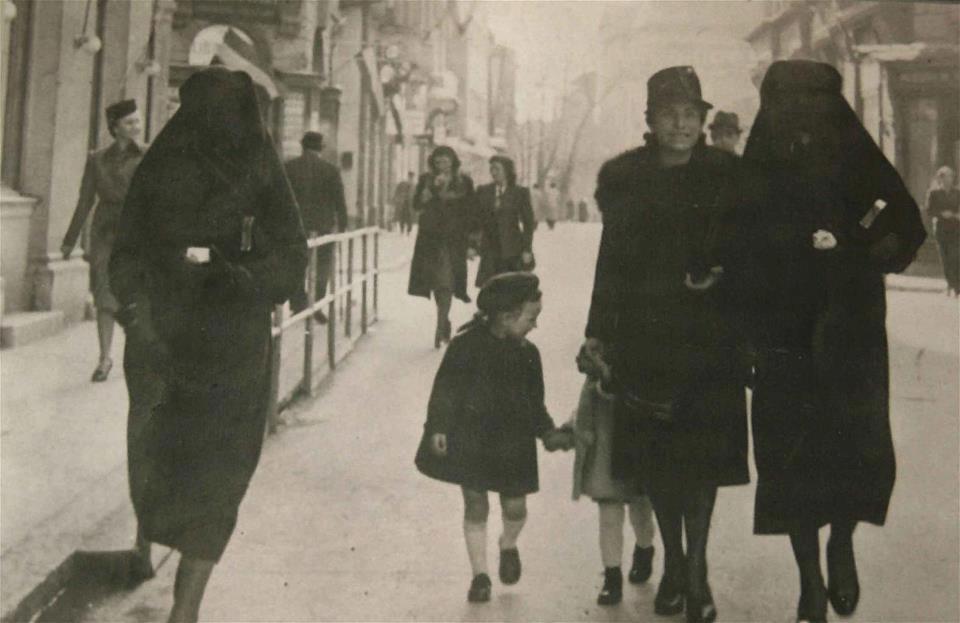
Muslim woman covers the yellow star of her Jewish neighbor with her veil on the
streets of Sarajevo in 1941. Photo (c) imgur.com, 2013
Bosnian War Memories Filmed for Oral History Archive
Posted in Uncategorized with tags Bosnia-Herzegovina, Bosnian War, cultural memory, oral history, testimony, yugoslavia on 11 November 2013 by delclem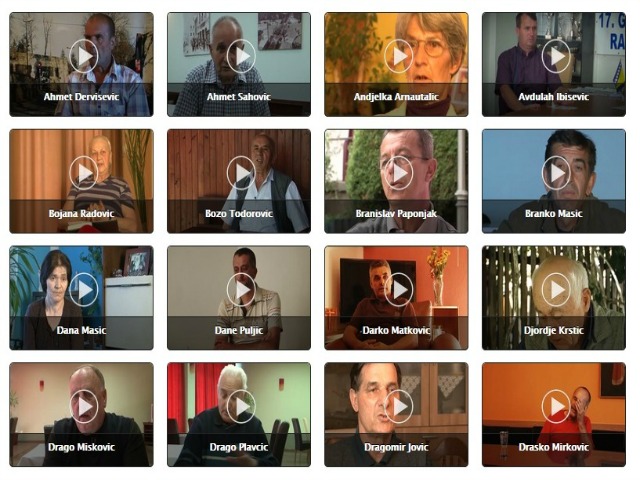
“From ex-officers and politicians to ordinary Bosnians, over 100 people have given video interviews for a new archive of memories of wartime suffering and imprisonment.” >article & photos (c) Balkan Insight, 2013
Anniversary of Viennese anti-Semitism
Posted in Uncategorized with tags 1938, anti-Semitism, Austria, commemoration, Germany, National Socialism, November Pogrom, Vienna on 9 November 2013 by delclem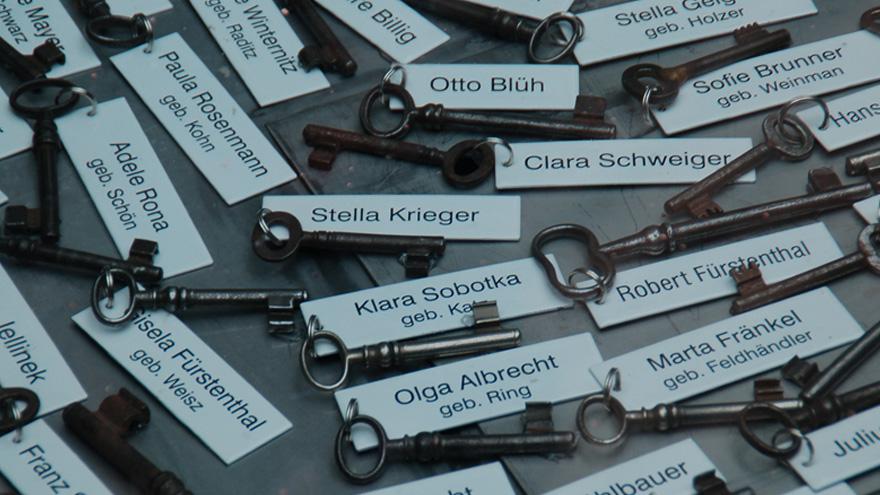
A commemoration for the co-called “Night of Broken Glass”, the Nazi Pogroms
on 9 November 1938. >text & photos (c) wieninternational.at 2013
Hungarian far-right sparks protests as it commemorates wartime leader
Posted in Uncategorized with tags Budapest, cultural memory, fascism, hsitory, Hungary, Jobbik, Miklós Horthy, right extremsism on 6 November 2013 by delclem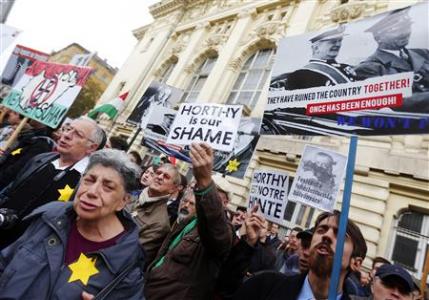
“Hungary’s far-right Jobbik party unveiled a statue of wartime leader Miklos Horthy who presided over the country’s alliance with Nazi Germany, in Budapest on Sunday, sparking protests and highlighting concerns about anti-Semitism in the country.” >text & slide show (c) reuters 2013; another article (c) Hungarian Spectrum, 2013
Modernist art ‘looted by Nazis’ recovered
Posted in Uncategorized with tags 'degenerate art', art haul, Germany, modernism, Munich, National Socialismu on 5 November 2013 by delclem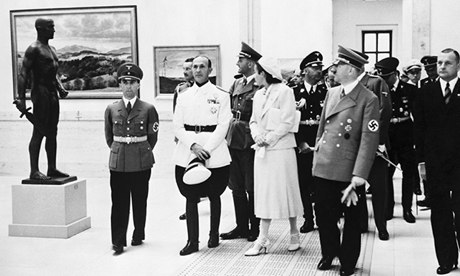
“About 1,500 modernist masterpieces – thought to have been looted by the Nazis – have been confiscated from the flat of an 80-year-old man from Munich, in what is being described as the biggest artistic find of the postwar era.”
>article & photo (c) THE GUARDIAN, 2013
The Strange Power of ‘Fiddler on the Roof’
Posted in Uncategorized with tags Ashkenasim, Eastern Europe, Fiddler in the roof, Jews, Russia, Sholem Aleichem, Yiddish on 2 November 2013 by delclem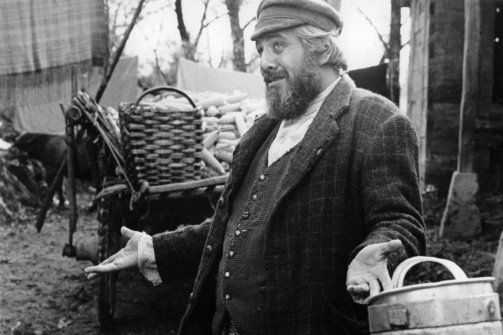
“What is it about Sholem Aleichem’s stories of a poor milkman in the shtetl that has audiences bewitched for nearly 50 years after the smash musical debuted on Broadway? The new cultural history of Fiddler.” >text (c) The Daily Beast 2013
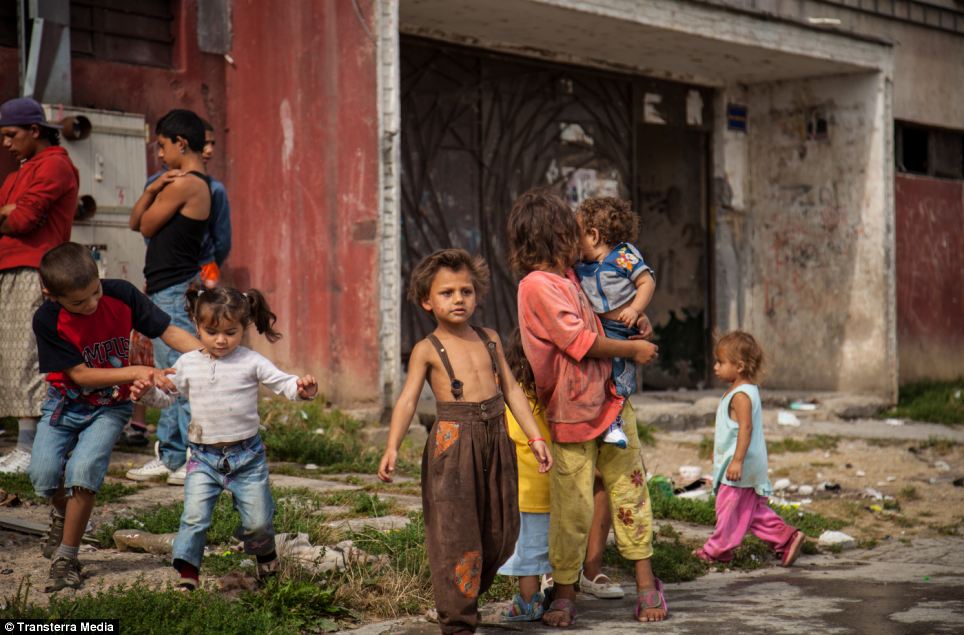
Discrimination against Roma traced back
Posted in Uncategorized with tags Central Europe, discrimination, Eastern Europe, gypsies, history, Košice, marginalization, Roma, Slovakia on 1 November 2013 by delclem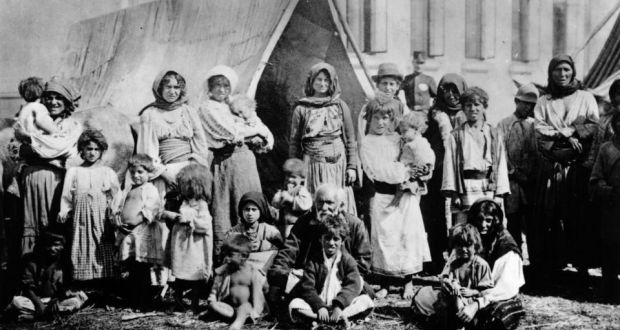
“Discrimination against Sinti & Roma is an inextricable part of their millennium-old history in Europe. The discrimination could be seen as an understandable reaction of the settled population to nomadic strangers. However the Roma and their advocates argue that the nomadic lifestyle is a consequence, rather than cause, of the discrimination.” >full text (c) THE IRISH TIMES, 2013
More: How Racist Assumptions fuelled the ‘Maria’ Disaster >text (c) SPIEGEL,2013
Another article: the Slovak city of Košice as ‘slumdog millionaire’?
>text & disturbing photos (c) THE DAILY MAIL, 2013
 delirium clemens
What Putin, Lukashenko and Yanukovych Share
Posted in Uncategorized with tags Alexander Lukashenko, authoritarianism, Belarus, Eastern Europe, leadership, political commentary, Russia, Ukraine, Viktor Yanukovych, Vladmir Putin on 3 November 2013 by delclem“Last Friday marked the 10th anniversary of the imprisonment of former Yukos CEO Mikhail Khodorkovsky. Meanwhile, former presidential candidate Nikolai Statkevich, leader of the Belarussian Social Democratic Party, will start the third year of a six-year sentence in a medium security penal colony. In Ukraine, Yulia Tymoshenko will have completed two years of her seven-year sentence for “abuse of power” and “embezzlement” unless released under the pressure of the European Union. All three are widely considered to be political prisoners. But while focus has often been on the wrongfulness of their detentions, less has been written about the motives of those behind them: Presidents Vladimir Putin, Alexander Lukashenko and Viktor Yanukovych.” >full text (c) THE MOSCOW TIMES, 2013
Leave a comment »