Archive for Nationalism

‘Post/colonial’ & ‘multi-kulti’ Central Europe (necessary PS)

Posted in Uncategorized with tags , , , , on 23 May 2011 by delclem

An old friend of mine has pointed out  that in many countries (e.g. Canada), multiculturalism is misunderstood as multi-nationalism. According to him, each *nationality* within a multi-ethnic society constructs their little cultural backyard, an allotment garden as it were, with  hedges and garden gnomes. *Multikulti* then is a mere pretext for cultural segregation and *living out* your prevailing cultural narratives (one of the most polemic examples: Islamist attempts to introduce Sharia into western judiciary) without caring too much about the others and their cultures. Continue reading

Belgium: a never-ending story?

Posted in Uncategorized with tags , , , on 6 May 2011 by delclem


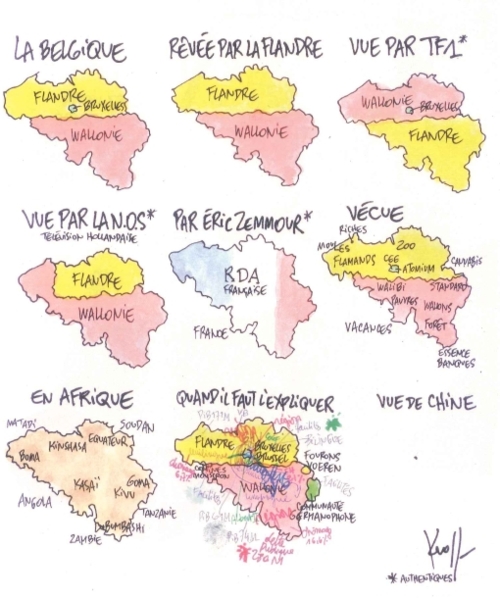
Is it just political shadow boxing or has the last act of the “Flemish vs Walloon” tragicomedy already begun? However, Belgium is not Central Europe – or is it? Some food for thought for nationalists and Europeans.
(>> switch to  German version)

Belgium is like the unloved rich aunt in the nursing home, whose death is expected with impatience by her would-be heirs. However, auntie has been surviving quite a few serious illnesses throughout the years – only to be carried away by a simple flu one day. Is it so with Belgium this time – now that the country holds the dubious European record of not having a working new government more than a year after elections were held in 2010 after another year of political crisis?

Continue reading

Heimat Altar?

Posted in Uncategorized with tags on 13 April 2011 by delclem

. Photo (c)ruthner, Sarajevo 2011

Pop Music & Nationalism

Posted in Uncategorized with tags , , , , , on 17 February 2011 by delclem

Culture is a battle ground for significance and distinction… a never ending story.

Example: the Serbo-Canadian rap group Illuminati X (FKA Street Team Balkan Beasts) which made itself a name for its nationalistic lyrics…

Self-victimization and comparative suffering serve as a legitimizing strategy –
for more violence?