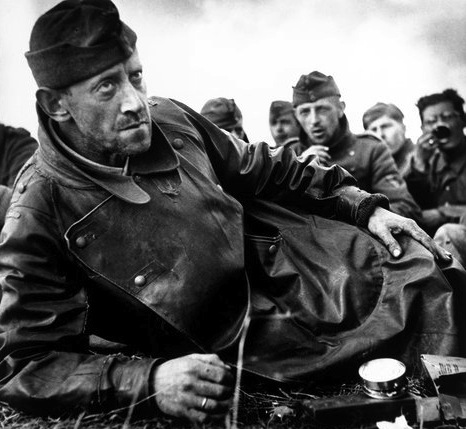
“Growing consciousness of the Holocaust in both academic scholarship and society in general became evident in the late 1970s and intensified in the 1980s. Initially, important research focused on the different roles of Hitler, Nazi ideology, and the structure of the dictatorship in shaping the decision-making process that led to the Holocaust. Research also concentrated on the complicity of various professions and institutions in the Third Reich, and particularly on the SS. Still lacking was careful empirical study of how Nazi racial policy was also carried out by “ordinary” Germans.” >text (c) NEW YORK REVIEW OF BOOKS, 2013
Happy Bloomsday 2013!
Posted in Uncategorized with tags Austria, Central Europe, Hungary, James Joyce, Leopold Bloom, Literature, Szombathely, Trieste on 16 June 2013 by delclem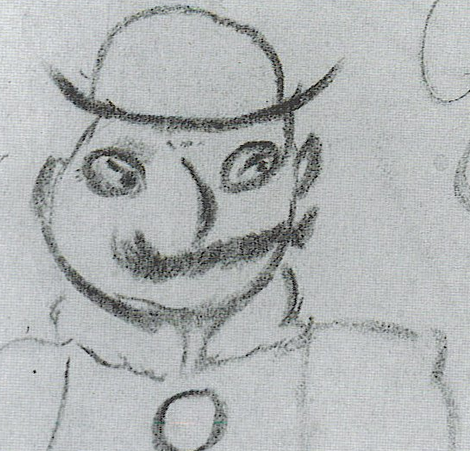
Enjoy your Ulyssey: James Joyce’s hero Leopold Bloom is probably the most closet Central European protagonist of Anglophone literature.
Minnesota man accused of Nazi war crimes
Posted in Uncategorized with tags collaboration, Germany, Holocaust, Michael Karkoc, Second World War, Ukraine, war crimes on 14 June 2013 by delclem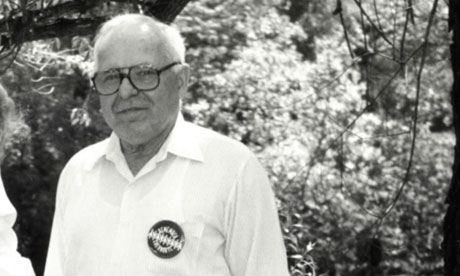
Michael Kardoc, commander of a SS-led unit “accused of burning villages filled with women and children, lied to American immigration officials to get into the United States and has been living in Minnesota since shortly after World War II, according to evidence uncovered by The Associated Press.” Behind this archetypical story the ugly face of Ukrainian nationalist Nazi collaboration in the Holocaust appears once again. >full text & video (c) HUFFINGTON POST, 2013
>Additional information (c) CANADA.COM 2013
Austrofascism revisited
Posted in Uncategorized with tags Austria, Austrofascism, Emmerich Tálos, Engelbert Dollfuss, First Republic, history, Kurt Schuschnigg, Moscow, Vienna on 12 June 2013 by delclem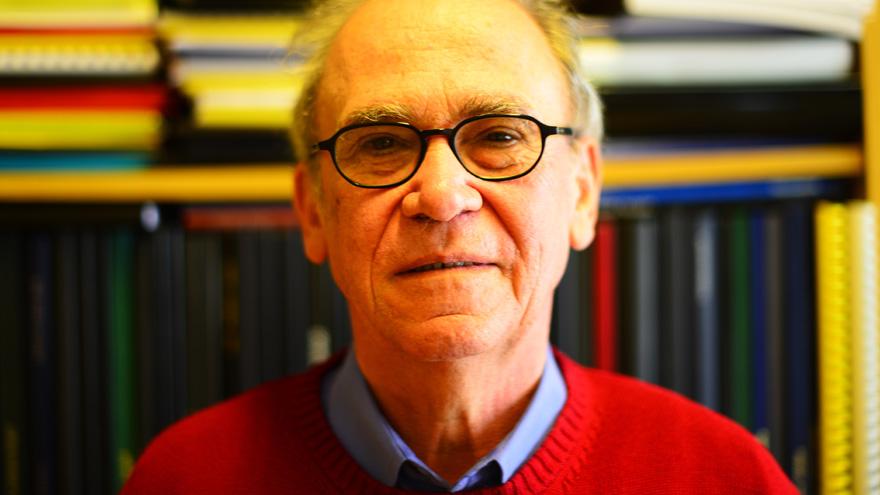
Austrofascism (1933 – 1938) “was not just a corporative state [Ständestaat] but a ‘despicable, unpopular, authoritarian Austrian dictatorship’. This is the conclusion reached by the retired Austrian political scientist Emmerich Tálos in his new book entitled Das austrofaschistische Herrschaftssystem. Tálos studied some 200 boxes of historical archive material returned by the Russian authorities from Moscow to Vienna in 2009.” Interview (c) WIENINTERNATIONAL.AT, 2103
“In the Dark Depths of the Unconscious”
Posted in Uncategorized with tags Austria, exhibition, Poland, review, the Fantastic, Vienna, Visual Arts, Zdzisław Beksiński on 10 June 2013 by delclem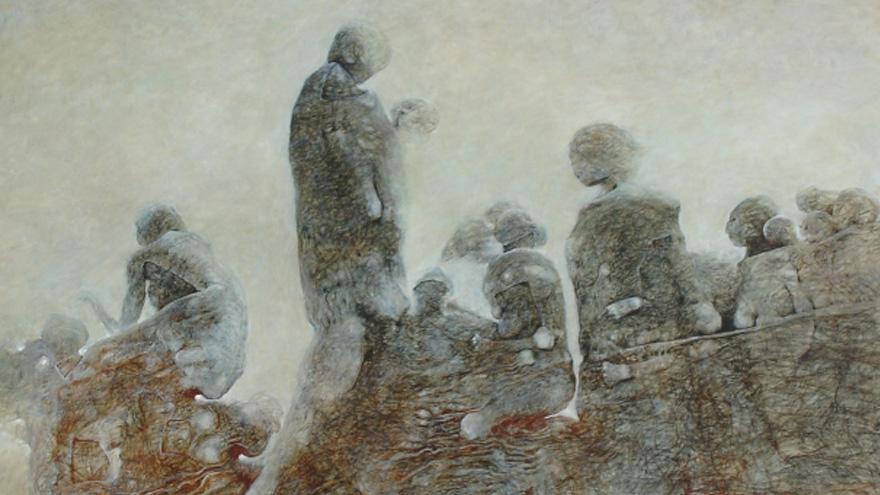
“Emaciated bodies, skeletons, phantom-like apparitions and post-apocalyptic landscapes – all of these are motifs that the Polish artist Zdzisław Beksiński (1929-2005) captured on canvas. All of these paintings have something ephemeral, other-worldly, something difficult to capture. Even if you take a closer look it is difficult to get a clear idea of what you are seeing.” Exhibition to be seen at the Phantastenmuseum in Vienna until 22 June >review & photos
(c) WIENINTERNATIONAL.AT 2013
“Kicking the Germans Out of the East”
Posted in Uncategorized with tags Central Europe, ethnic Germans, expulsion, National Socialism, Soviet Union, World War II on 8 June 2013 by delclem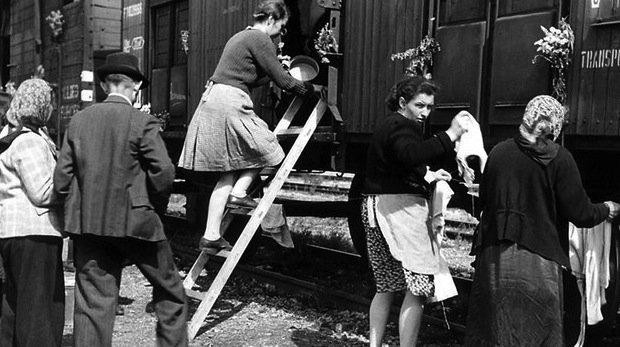
A recent book by Colgate historian R.M. Douglas “has opened, or rather reopened, yet another tortured and largely ignored chapter of World War II, (…) whose specter is still dragging and clanking its chains” across Central and Eastern Europe.
>review (c) NEW YORK REVIEW OF BOOK, 2013
“The real Karl Marx”
Posted in Uncategorized with tags biography, Jonathan Sperber, Karl Marx, Marxism, review on 6 June 2013 by delclem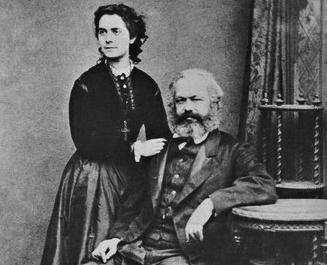
“In many ways, Jonathan Sperber suggests, Marx was ‘a backward-looking figure,’ whose vision of the future was modeled on conditions quite different from any that prevail today (Karl Marx: A Nineteenth-Century Life
>review (c) NEW YORK REVIEW OF BOOKS, 2013
Street Art
Posted in Uncategorized with tags Burka, gender, Islam, NiqaBitch, Paris, Performance art, street art, women on 4 June 2013 by delclemIntelligent French street performance that undermines xenophobic as well as fundamentalist views of the “Muslim woman”. We’d urgently need some of those in Central Europe…
Time Travel
Posted in Uncategorized with tags 1929, Berlin, fil, Germany, urban life on 3 June 2013 by delclemSweet oblivion?
Posted in Uncategorized with tags 1946, Europe, Germany, Great Britan, speech, Winston Churchill, Zürich on 2 June 2013 by delclem
“There must be what Mr Gladstone many years ago called a ‘blessed act of oblivion’. We must all turn our backs upon the horrors of the past and look to the future. We cannot afford to drag forward across the years to come hatreds and revenges which have sprung from the injuries of the past. If Europe is to be saved from infinite misery, and indeed from final doom, there must be this act of faith in the European family, this act of oblivion against all crimes and follies of the past.” Winston Churchill (Zürich speech, 1946) However, Europe today seems to be rather built on the cultivation of trauma memory.

