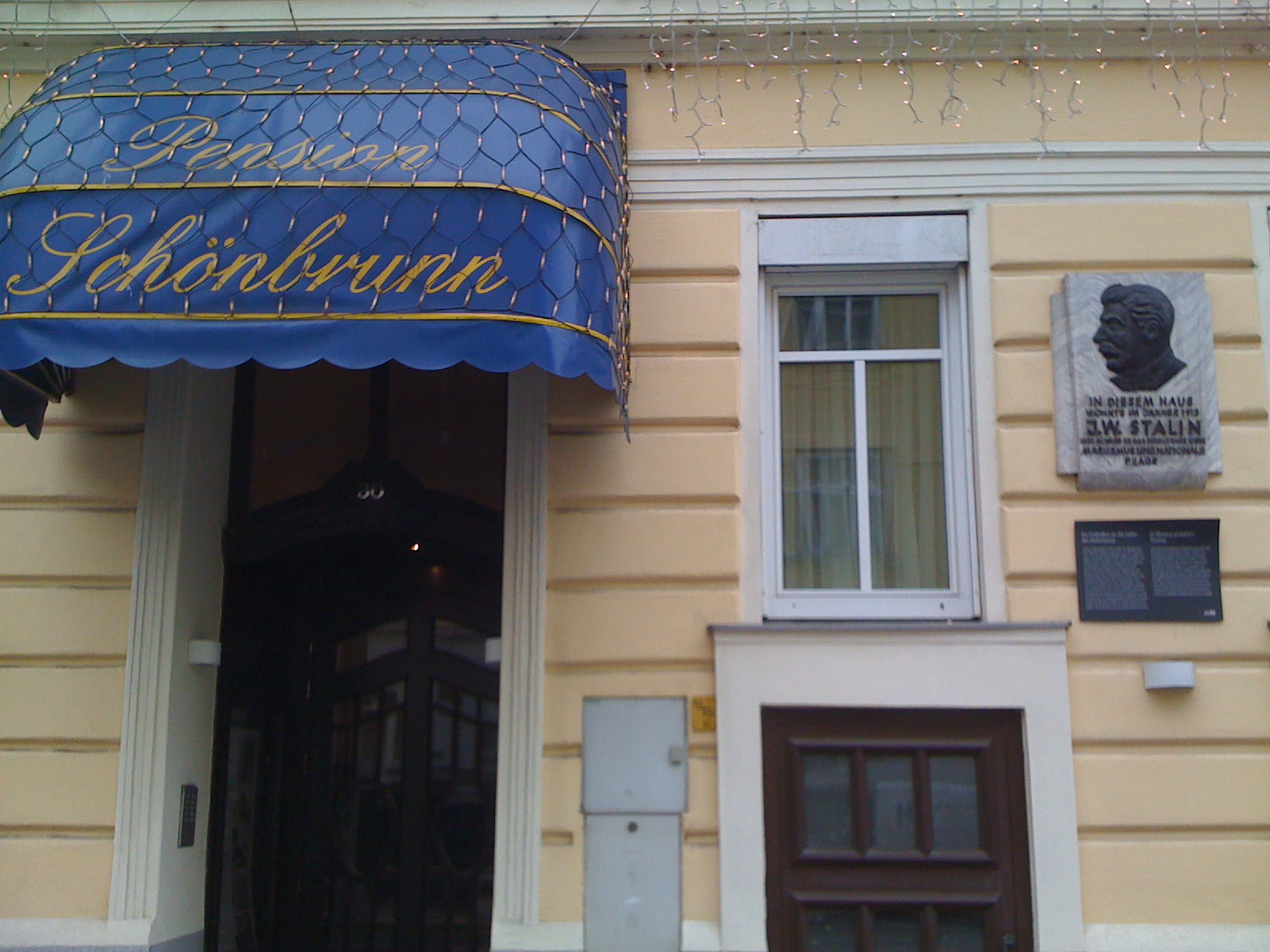
101 years ago, in January 1913, Ioseb B. dze Jugashvili aka. Joseph Stalin stayed in Vienna for a while to investigate the multi-ethnic setup of the Habsburg Monarchy for his publication on Marxism & the National Question.In 1949 the Austrian Communist Party KPÖ put a commorative plaque on the facade of the building in Schönbrunner Schlosstraße (no. 30) on the occasion of Stalin’s 70th birthday. In 2012, an additional plaque was mounted to commemorate Stalin’s/Stalinist crimes as well – a very Austrian solution to the problem, it seems. >more (in German); photo (c)ru, 2014
Archive for Stalinism
Stalin in Vienna: 1913, 1949, 2012
Posted in Uncategorized with tags Austria, Habsburg Monarchy, Joseph Stalin, Russia, Soviet Union, Stalinism, Vienna on 12 January 2014 by delclemRaoul Wallenberg 1912-47(?): savior & victim
Posted in Uncategorized with tags Holocaust, Hungary, Raoul Wallenberg, Soviet Union, Stalinism, Sweden, World War Two on 4 August 2012 by delclem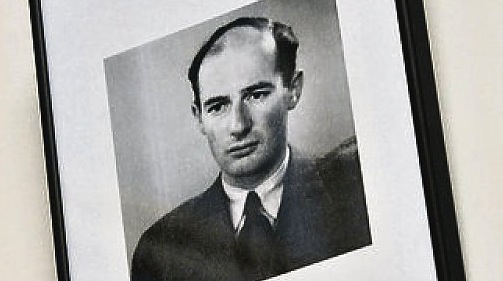
“A Swedish diplomat saved the lives of many Hungarian Jews in the Holocaust, but his fate since he was abducted by the Soviets in 1945 is unknown.”
A call to remember & research on the occasion of his 100th birthday.
>full text (c) HAARETZ, 2012 >video on Wallenberg (c) YouTube, 2011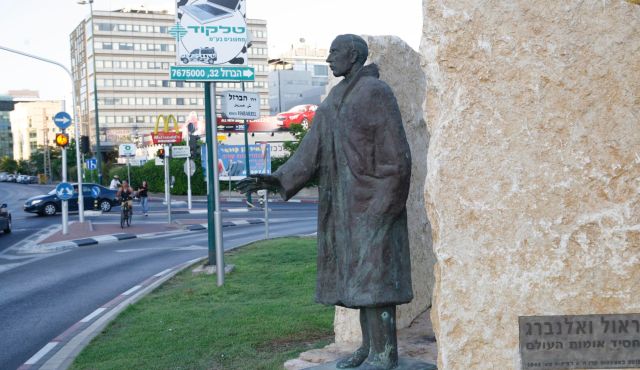
A statue of Raoul Wallenberg in Tel Aviv: photo by Tomer Appelbaum
Upper photo: Wallenberg portrait in the Austrian Embassy, Budapest (c) EPA
The Khatyn Massacre in Belorussia Revisited
Posted in Uncategorized with tags Belorussia, Germany, Katyn, massacre, Poland, Second World War, Soviet Union, Stalinism on 5 April 2012 by delclem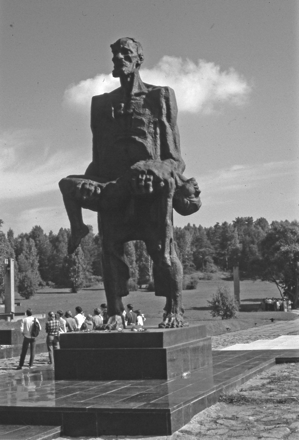
The brutal March 1943 massacre in the Belorussian village of Khatyn, commemorated in a 1969 memorial, has come to symbolize the horrors of the German occupation. Given the continuing centrality of the massacre to Belarusian memory politics, the details of the event remain under-studied. For political reasons, Soviet authorities and Ukrainian diaspora nationalists alike had an interest in de-emphasizing the central role of collaborators in carrying out the massacre. Using German military records, Soviet partisan diaries, and materials from Belorussian and Canadian legal cases, the author of this article revisits one of the most infamous, yet least understood war crimes committed on Soviet territory. > Article by Per Anders Rudling. Photo: statue of Iosif Kaminskii at Khatyn memorial site, Belorussia, ca. 1981. (c) Michael Gelb.
 delirium clemens