Habsburg, postcolonial
 > GERMAN VERSION
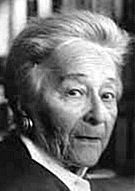
The idea is not really new. ‘Postcolonial approaches’ to the late Habsburg Monarchy are already to be found in Robert Musil’s famous novel Der Mann ohne Eigenschaften (“The Man Without Qualities”), and we can find instances of such a view with other contemporary observers as well, such as the Viennese art historian Hilde Zaloscer. Born in 1903 to a middle class, German-speaking Jewish family in Banja Luka, Bosnia, Zaloscer and her family fled to Vienna after the First World War, and then, in 1938, further to Alexandria, Egypt.
In her autobiography entitled Eine Heimkehr gibt es nicht (“There’s No Coming Home,” Vienna 1988), she repeatedly compares her “happy childhood days […] ‘on a volcano’”* with her Egyptian exile which at the time was de facto still under colonial rule:
“Basically it was the same constellation as in Bosnia before the First World War. There, too, a foreign ethnic group – in this case, the Austrians – in a country appropriated through violence, kept the people at an educationally inferior level by means of skillful politics.” (p. 129)*
“Later, in Egypt, I found myself in the same situation […] There were – at least at the beginning of my stay – the ‘natives’ as the less regarded, and we, the Europeans, as the elite.” (p. 14)*
In its not really scholarly, yet still critical analysis, Zalsocer´s narrative itself certainly bears some features which are characteristic of the discourse of colonial domination: for example, the still effective symbolic division of the Old World into ‘Europe’ (the place of Enlightened civilization) vs. the ‘Orient’ (= Islam), as described by Edward Said in his classic work, Orientalism (New York 1978). Similarly, in Zaloscer´s text the Balkans and North Africa are not only regarded as Europe´s Other, but they are also equated as spheres of interest in the hegemonic expansion of the latter (and both cases indeed represent abandoned territories of the Ottoman Empire).
Also to be found between the lines of this autobiography is the idea reminiscent of Rousseau and Darwin, that the local indigenous population is somehow “fresher” and “healthier” than the ruling foreign elites who are virtually ‘exhausted’ by the process of civilization, if not decadent. Nordau, Spengler, and other theorists of “degeneration” around 1900 are greeting us, as it were, when Zaloscer writes:
“It was not appreciated very much […] that in high school, I preferred socializing with the Serbian girls who were beautiful, big, healthy creatures [!] and not as unimpressive as Elsa, Lola and Sophie, the daughters of the Austrians.” (p. 15)*
This is the kind of symbolic differentiation that is provided in every imperial culture of the day for its participants, in form of ethnicized images of the Self and the Other which serve as a medium of power. In old Austria, however, the dominant (German) population’s view on Slavic fellow citizens is often much more derogatory than in the quotation above. As can be learned from several texts of the early 1900’s, xenophobia and racism were widespread; discourses which, along with the anti-Semitism of the Lueger era, would later inform the most infamous political autobiography of the 20th century, Hitler’s Mein Kampf (1925/27). The historian Brigitte Hamann writes in this context:
“Hitler’s statements about ‘the Czechs’ have little to do with personal experience. They are just repeats of the ‘old Vienna keywords,’ as he says in 1942: ‘Every Czech is a natural-born nationalist who subordinates all other obligations to these interests. You should not be mistaken here: the more he bends, the more dangerous he is … The Czech is the most dangerous of all Slavs, because he is diligent. He shows discipline and he is well-organized; he is more Mongoloid [!] than Slavic.'” (Hamann, Hitlers Wien, Munich 2001, p. 463-4)*
What is meant here by “the old Viennese keywords” is systematic ethnic stereotyping with a structure of inclusion/exclusion and the underlying social hierarchy it insinuates. This is not typical only of the cultural situation in imperial Vienna at the turn of the centuries. However, among other factors, it is this phenomenon of ‘nationality conflict’ which for posteriority turned the Austrian capital circa 1900 into what the contemporary observer Karl Kraus called the “Lab of the Apocalypse” (“Versuchsstation des Weltuntergangs”).
Thus, approaches developed in the context of postcolonial studies appear suitable for an analysis of the late Habsburg monarchy, spceifically: the cultural repercussions of Austrian rule, for instance, the impact of domination on the imageries of the involved cultures, i.e. the aforementioned ethnic ‘differentiation’ in everyday myths and stereotypes of the Self and the Other. By revealing the cultural and political aftermath of foreign rule in state, society, and in cultural memory, the postcolonial perspective also entails the rejection of too much ‘liberation’ euphoria.
Said and his followers have not had too many illusions about the decolonization of Latin America, Africa and Asia in the 19th and 20th centuries: in most cases, it only led to nationalist counter-violence, fundamentalism, the rule of indigenous or ‘Creole’ elites, new oppression, dictatorship, civil wars, border conflicts, etc. – all of it prepared, as it were, by the colonial structures that had been established before. The system of ‘ethnic differentiation’, however, has to a large extent stayed in place even under home rule, albeit now under a different banner.
Also in this respect, we gain some interesting observations from Zalsocer´s gaze which oscillates between Bosnia and Egypt; for instance, when she makes “centuries of colonization, pent-up aggression, an unbearable feeling of inferiority […] and the problem of increasingly difficult material conditions” (p. 122)* responsible for the emerging xenophobia in Alexandria. About the political changes in Bosnia-Hercegovina in 1918, she writes:
“The humble oppressed of yesterday were now the masters and retaliated. Austria’s policy had been like any colonialism, and now it bore fruit. “(p. 24)*
“Compared with the ‘winners’ we would later know, the victors of that time behaved relatively decently, considering what Bosnians had to suffer under Austrian rule.” (p. 32)*
With statements like these, we are back from Africa to the self-destruction of Central and Southeastern Europe in the 20th century, its various nationalisms, revolutions, wars, and dictators.
Here, what is noteworthy is Hilde Zaloscer’s refusal of the “Habsburg myth” which has often been exploited as retrospective-utopian antidote to nationalist terror and totalitarian communism (after having been established originally by the Italian critic Claudio Magris 1963 as a heuristic tool for the analysis of Austrian literature of the 19th and 20th centuries). In Zalsocer, however, Bosnia-Hercegovina does not figure as nostalgic topos of a Happy Yesterday with the Multikulti coexistence of ethnic groups; rather the territory is presented as the site of the historical dialectics of “colonial policy” which brings about not only ‘civilization’ (efficient administration, infrastructure, education etc.), but also political repression, cultural hegemony and the fateful division of the population into increasingly ethnicized religious groups.
It was Magris himself who wrote that one of the “historical components” of the Habsburg myth was the “cultural colonization of Eastern Europe”* (Salzburg ²1988, p. 13). In general, however, the applicability of the concept of colonialism for phenomena of Habsburg’s political, economic and cultural rule in Central Europe has remained rather controversial; moreover, the distinctive factor of ‘colonialism’ vis-à-vis the more general, but also ideologically more loaded term ‘imperialism’ is not always clear. Caution is advised, if you want to escape the charge of being merely fashionable.
On the other hand, as not only Zaloscer´s autobiography makes clear: the correspondence of the (historically simultaneous) great colonial empires of Britain and France with the multi-ethnic state of Austria-Hungary in the age of modernism is hardly to be overlooked. This seems to have been already evident to the German traveller Heinrich Renner who used the term colonialism more than a hundred years ago while writing in a naive, affirmative manner about Austria-Hungary and her ‘achievements’ in Bosnia-Hercegovina:
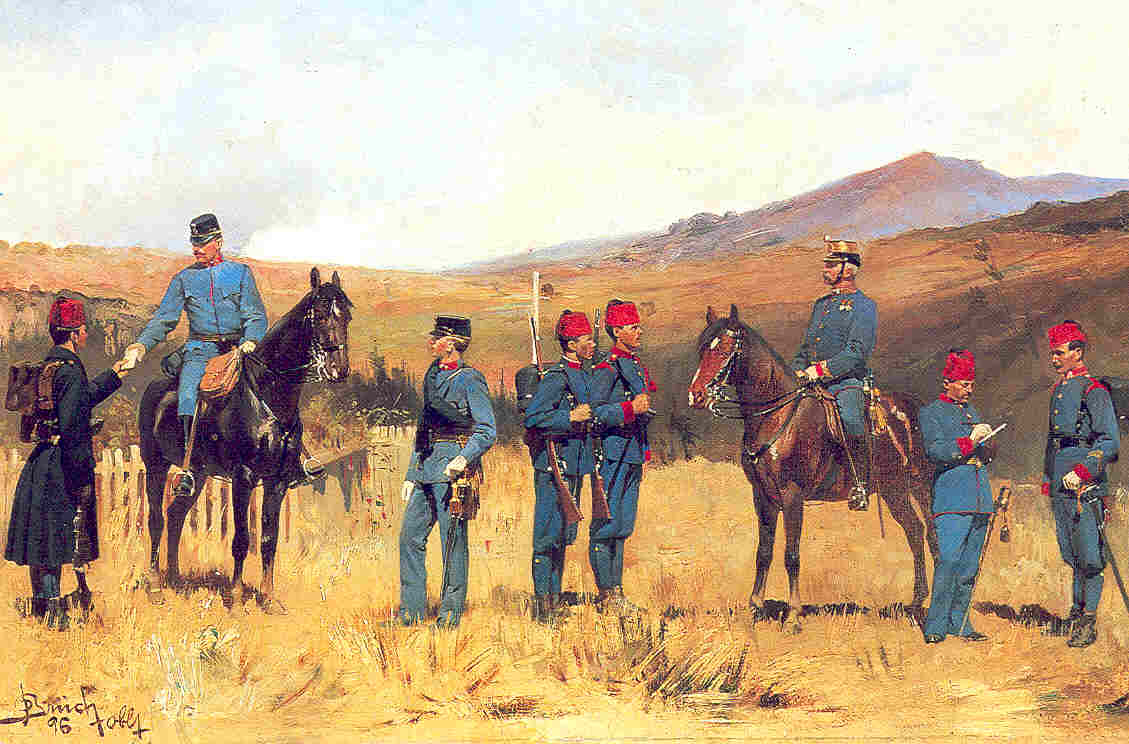
These regions […] remained completely unknown to the wide public; the Bosnian Sleeping Beauty still slept her age-old magical sleep and was only resurrected when the Imperial troops crossed the border and ushered in the new era. The thicket that had sprawled around Sleeping Beauty’s castle was then cleared and after less than two decades of restless and arduous work Bosnia is now known and respected by the world. What has been achieved in this land is practically unparalleled in the colonial history of all peoples and epochs […]” (Durch Bosnien und die Hercegovina kreuz und quer. Wanderungen von Heinrich Renner. Berlin 1896, S. V)*
Historical reports on the occupation of Bosnia in 1878 sound quite different and much less like a fairy tale. There you will find descriptions of violent clashes between Bosnian insurgents and the Austro-Hungarian army during the occupation, as well as, later on, of civilian resistance, ethnic conflicts, economic stagnation and problems in establishing a civil administration. There is much less about the ‘blessings of civilization’, as the renowned British historian A.J.P. Taylor writes polemically in 1948:
“The two provinces were the ‘white man’s burden’ [!] of Austria-Hungary. While other European Powers sought colonies in Africa for the purpose, the Habsburg Monarchy exported to Bosnia and Hercegovina its surplus intellectual production – administrators, road builders, archeologists, ethnographers, and even remittance-men. The two provinces received all benefits of Imperial rule: ponderous public buildings; model barracks for the army of occupation; banks, hotels, and cafés; a good water supply for the centres of administration and for the country resorts where the administrators and army officers recovered from the burden of Empire. The real achievement of Austria-Hungary was not on show: when the Empire fell in 1918, 88 per cent of the population was still illiterate” (The Habsburg Monarchy 1809-1918. Harmondsworth 1990, p. 166).
However, the question of whether Austro-Hungarian rule in Bosnia-Hercegovina or in other regions on the periphery of the Habsburg Empire, such as the Western Ukraine (Galicia), for example, should be classified as “colonialism“ or ‘only’ as “imperialism“ is not the point. Labels are for bureaucrats like those administrators of Sarajevo at the time. In contrast, what is most interesting to me is the effect those conditions of domination had e.g. on individual and collective identity formats, briefly: the cultural aftermath which is political at the same time. But also in general, the case of Bosnia-Hercegovina shows quite a few similarities to British rule in India and indicates there is some Austro-Hungarian historical responsibility for having established certain structures of thinking and doing.
(c) Ruthner, 2001-2011 (extract from paper presentation)
*) Translation mine.
PS 1. A more specific (scholarly) article on the subject matter
(same author:) Kakania´s Little Orient
PS 2. A recent comment in the Guardian entitled:
Ignoring imperial history licences the West to repeat it
PS 3. Some remarks on “multikulti” & “Postcolonial”


1 May 2011 at 16:49
What would we all do without the brilliant concepts you discuss on this blog? Who has got the fortitude to deal with critical topics in the interest of common subscribers like me? My spouse and i and my buddies are very blessed to have your web blog among the ones we frequently visit. It is hoped you know how considerably we enjoy your working hard! Best wishes through us all.
18 June 2011 at 17:20
Kudos! What a neat way of thniknig about it.
19 June 2011 at 03:56
You have shed a ray of snuhisne into the forum. Thanks!
2 May 2011 at 06:44
The suggestions you shared here are very precious. Rrt had been such a pleasurable surprise to see that looking forward to me immediately i woke up today. They are usually to the point as well as simple to learn. Thanks for your time for the valuable ideas you’ve got shared here.
18 June 2011 at 19:27
That’s way the bestest asnwer so far!
19 June 2011 at 06:12
That’s way the besstet answer so far!
28 May 2011 at 13:04
Impressive post. Thank you. Please keep writing.
19 June 2011 at 01:31
Ppl like you get all the brains. I just get to say tankhs for he answer.
19 June 2011 at 10:05
Wow, your post makes mine look feelbe. More power to you!
28 May 2011 at 14:49
I am glad to be one of several visitants on this great internet site (:, regards for putting up.
18 June 2011 at 21:40
Superior thinking dmeonsrtaetd above. Thanks!
19 June 2011 at 13:51
YMMD with that asnewr! TX
19 June 2011 at 00:51
Wow! That’s a rlelay neat answer!
19 June 2011 at 07:36
Glad I’ve finally found smoetihng I agree with!
6 June 2012 at 12:33
Meh. The royal wedding crap aelpaps to all those women who started dreaming about THEIR “royal” wedding about the time they could crawl. It’s envy. “Gee whiz! I wish I was as thin and pretty as she is! And her DRESS! D-I-V-I-N-E! And wouldn’t it be great to be married in that big church instead of the local Kiwanis hall! And if my husband to be was a prince instead of… well… what I got stuck with.”It also aelpaps to people whose lives (and minds) are so vacant that “the lifestyles of the rich and famous” represents rich, delicious escapism. These are the same sort of folks who obsess over who is dating whom in Hollywood, i.e. American royalty.Actually, I suppose that it’s a bit of an insult to Liz, William, et al to call Hollywood types “royalty”; several of the British royals have served with varying levels of distinction in their armed forces, which means that they have actually contributed something to the world beyond the occasional less-than-mediocre performance in a movie.