Biting (Sex?) Appeal
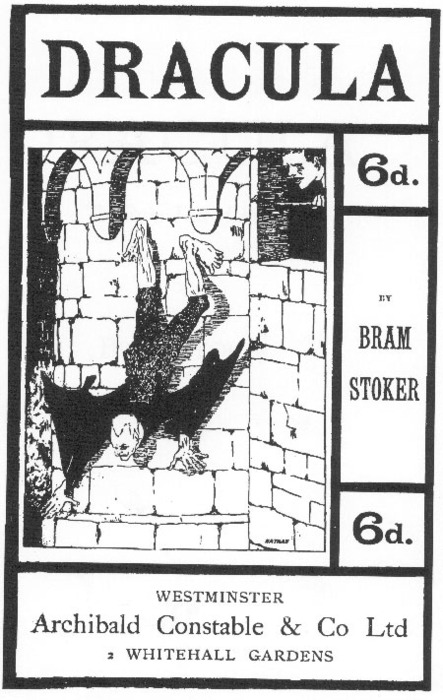
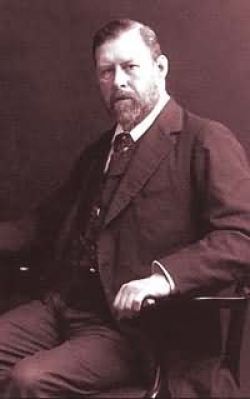
20 April 1912 was not only the 23rd birthday of an unknown wanna-be named Hitler; it was also the day when Bram Stoker, author of the immortal Dracula novel, died. > GERMAN TEXT VERSION
“This is the textbook of vampirism, but the journalist Bram Stoker has turned it into a typewriter ad,” wrote the Austrian Alfred Kubin, himself a master of uncanny art, in a letter full of contempt in 1915. He has not been the only critic since trying to desecrate the tomb of the Anglo-Irish author. However, this has done little damage to the undead popularity of the literary work in question: Dracula (1897), apart from Mary Shelley’s Frankenstein (1818) probably the most successful undead monster of world literature; a novel that has never been out of print in its more than 110 years on the book market.
Its ingredients are simple and fairly traditional: the Transylvanian nobleman Dracula first threatens the bourgeois British business traveler Jonathan Harker, and later his wife-to-be, Mina, until the vampire is hunted down by male bonding eventually. What is really new about this vampire villain from the depths of Eastern Europe is that Dracula not only assaults singular women, but covers all of England with a veritable invasion from the grave, an undead D-day as it were: a (latently racist) horror scenario as a consequence of Darwin’s “survival of the fittest”?
Whatever you may think about the political correctness of vampire tales, Dracula is pretty much written in the spirit of the British fin-de-siècle, insofar as the novel foreshadows the military confrontation with Germany and the multi-ethnic state of Austria-Hungary in World War One. The global threat by Dracula causes Stoker’s pack of vampire hunters – including the legendary Dutch Doctor Van Helsing – to fight back with modern technology, those gadgets which the critic Friedrich Kittler calls the “new media” of the time: a phonograph and a portable typewriter. Operating the latter, the alleged „New Woman“ Mina is morphed back into a cooperating secretary and later a caring wife by the narrative logic of the text.
If you believe Kittler, the novel thus deals, in addition to its own mediality, with the blessings of good office organization. It is an almost postmodern piece of auratic fiction of the file: “’We were,’ said Jonathan Harker, ‘subsequently struck by the fact that in the whole set of material from which the report is composed, is hardly an authentic document. Nothing but a mass of typewritten sheets full, also notebooks (…) and a memorandum. (…) We need no proof. We ask anyone that he gives us faith.’” So, in a manner of speaking: in the end was the word…
However, in the 1890s, when Stoker’s spooky bloodsucker slowly began to take shape, the vampires had already looked back over more than 250 years of (literary) history, without having died from exhaustion. They had actually begun their career as text files processed by Habsburg military personnel who acted as midwives, as it were, when the modern vampire was born. The undead writing started with cases of mass hysteria in parts of Serbia, which after the Peace Treaty of Passarowitz (Požarevac) in 1718 had come under Austrian military administration. Soon after, villagers started digging up their cemeteries to dispose of their walking dead following the classical method: stakes, beheading and burning.
In 1732 the Austrian army surgeon Johann Flückinger documented the most famous case of Medvedja, a village south of Belgrade, where vampires appeared epidemically after the death of the ex-soldier Arnod Paole. The “Heyduck Jowiza”, for instance, reported to the authorities “that his daughter by the name of Stano(ica) went to bed 15 days ago, being fresh and healthy, however, around midnight she woke up screaming, shivering and frightened, saying that she had been throttled by another Heyduck´s son who had been dead for nine weeks, after which event she finally passed away on the third day.” This story and others can be found in Viennese archives and in the excellent German text readers edited by Klaus Hamberger (Mortuus non mordet, 1991) and Dieter Sturm/Klaus Völker (Von denen Vampiren und Menschensaugern, 1968/94), respectively.
At the time, Serbia obviously was a sort of colonized (ex-Turkish) empire of the Evil for the imperial center in Vienna. This created a certain mindset in both the ‘Western’ invaders and the Serbian natives. And much like (e.g.) in cases of “possession” by “evil spirits” in Africa, what appears in the vampire belief are precarious social dynamics rather than the hereafter.
The Hungarian historian Gábor Klaniczay suggests a specific zeitgeist from which the Serbian undead ‘grew’: the uncertain aftermath of the Turkish wars, i.e. the religious conflict between Islam, Catholic and Orthodox churches at the time, a kind of culture war between “liberated” Slavs and their new Austrian management, and last, but not least, unrecognized epidemics as it was noted already by Gerard Van Swieten, personal physician to Maria Theresa. In their scapegoat function to explain the unexplained, the vampires for a while replaced Witchcraft which had already been banned by early Enlightenment, and thus they made the headlines all over Europe in Spring 1732.
Yet the folklore of the dead who return to haunt the bereaved and occasionally drink their blood has not died out since Antiquity, as it seems, particularly in South Eastern Europe and the North which is full of Wiedergänger (revenants) as well. As late as in 1886 the Lithuanian landowner Robert von Gostovski dug out his deceased father in order to fulfill the latter´s last will and threw his severed head into the bushes surrounding the graveyard. The court sentenced the son “due to lack of understanding of his guilt” not for desecration, but only for “mischief”. The last reported case of vampire craze in a Romanian village, however, dates from as recently as 2004 (see The Independent, 28 October 2007).
But also as a leisure activity vampirism is sometimes dead-serious: In December 1996 a bunch of U.S. teenagers were accused of murder because they had impaled their parents during a role-play. The case went through the press, but neither fans nor vampirologists are easy to put off: they keep visiting Dracula’s Homepage (operated by the Stoker expert Elizabeth Miller) and many other internet sites like the social network Vampire Club; they watch True Blood and Vampire Diaries, and, in the worst case scenario, they read Twilight.
It has certainly been the achievement of literature to transform the swollen dead peasants of Slavic folklore into the pale, melancholic aristocrat in the aftermath of William Polidori’s tale The Vampyre from 1819. No matter how hard the moral watchdogs of the canon tried to lock out the unwanted Balkan immigrants, even the big names of literature were not able to avoid the morbid fascination of the latter: neither J.W. Goethe nor Guy de Maupassant, Nikolai Gogol, Sheridan LeFanu, or Elfriede Jelinek. However, that Dracula & Co. have evolved into such a prevailing popular myth is certainly the merit of Anglo-Irish author Bram Stoker.
The 1847-born Dubliner was a childhood friend of Oscar Wilde and his rival when it came to the future Mrs. Stoker. He was also a man “without a face in the mirror,” as his biographer, Barbara Belford, puts it in a vampiristic way: Stoker was talented, mediocre, a newcomer rather tolerated than accepted or wanted by the cultural scene of London. In 1876 namely, the young civil servant and and amateur theater critic met the man of his life, whose manager he would stay until death: Henry Irving, one of the great actors of fin-de-siècle Britain, who mesmerized the crowds as Hamlet or Mephisto. He was the one who made Stoker disregard his own literary ambitions by sucking his labor and services out of him. Herein lies probably one of the few biographical components of the Dracula novel, as far as it is about the confrontation of a great villain with a small office clerk by the name of Harker.
Stoker’s great-nephew Daniel Farson, in his biography, presents another theory: According to him, Bram, after the birth of his son, was no longer allowed to approach the brittle beauty of Florence Stoker. He therefore frequently visited prostitutes and, while writing Dracula, got infected with syphilis, from which he would finally die. The vampire as frustrated male sexual fantasy of (omni)potence on the one hand, and on the other, as the nightmare of living in death caused by STD? Other biographers have objected vigorously here.
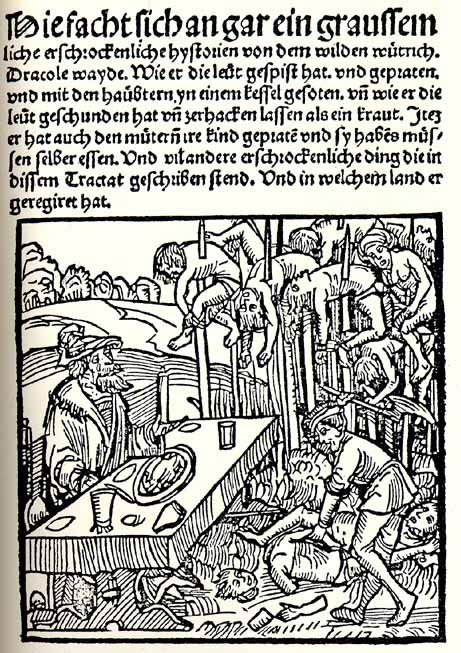
However, it is undisputed that Stoker’s demonic vampire count had a great historic role-model about whom many academic and amateur authors have written and speculated extensively: the cruel Wallachian prince Vlad III. Dracula (1431-76), a fierce Christian warrior against the Turks, who soon received his nickname Tsepesh (‘the Impaler’) because he had the cruel hobby of putting his opponents – prisoners of war, Transylvanian merchants and rebellious nobles, tens of thousands allegedly – on stakes where they died painfully. Contemporary pamphlets show him at a banquet, surrounded by almost a forest of impaled people. For the Romanians, nevertheless, he remains one of the great heroes of their cultural memory; the Communist dictator Nicolae Ceaușescu, for instance, had a monument built for Dracula in the ancient capital city of Tîrgovişte on the occasion of the 500th anniversary of his death in 1976.
It is common sense that Vlad was a bloodthirsty leader with a Machiavellian raison d’etat though there is no indication after all that he was a vampire or undead, particularly after his own assassination. For Stoker, the ruler’s first nickname probably served as a semantic link between the historic mass murderer and vampirism: „Dracula“ means “dragon” in Romanian, but also “devil,” and in a German folklore source from the 19th century, the D-word is also used for the blood-drinking dead. Stoker maybe learned about this from the German-born Oxford professor Max Müller, a specialist in mythology, who was sometimes a visitor at his Lyceum Theatre in London. This is a more likely version than the frequent rumors that the Hungarian Orient traveler Ármin Vámbéry, British spy in Central Asia and professor at the University of Budapest, was the informant (although he is indeed mentioned in the novel).
Regardless, Stoker has proven to be a world champion in the cut-and-paste combination of travel literature and popular science. He was a sort of Irish Karl May, since he had never seen the locations in Eastern Europe, which he would describe in his novel, with his own eyes. Under the impression of Transylvanian travelogues he changed the main setting of his novel; his originally plans were to involve Styria, the province in South Eastern Austria where Sheridan LeFanu’s famous Lesbian vampire tale Carmilla (1872) is set.
All in all, Dracula is a clever recipe of success, the full flavor of which was only to be felt after Stoker’s death. A best-selling dramatized version of Dracula in London was exported promptly to New York’s Broadway, where an unknown actor took over the title part with a heavy Hungarian accent: Béla Lugosi, the man who in Tod Browning’s film version of 1931 made the black cape finally a trademark and was buried in it himself. Ever since, the biting and impaling business has moved more and more from textual to cinematographic cemeteries in the aftermath of F.W. Murnau’s legendary Nosferatu film from 1922 – a German rip-off that led to a copyright lawsuit with Stoker’s widow.
In any disguise, the vampire is not only an attractive villain, but also a willing victim. The reflection-free monster stands ready to absorb almost every interpretation into itself, as the German literary scholar Hans Richard Brittnacher has shown:
“the vampire appears sometimes as the emblem of a disenfranchised and vengeful aristocracy, sometimes as the symbol of a nymphomaniac femininity, sometimes as that of an excessive Don-Juanism, at times it is identified with Stalinism, at others with the Franco regime and at still others with the Jesuits, then again it is bureaucracy, venereal disease or the fear of newer scientific discoveries such as hypnosis and magnetism which find their likeness in the image of the vampire. Precisely this elasticity prohibits a simple interpretation” (Ästhetik des Horrors, 1991).
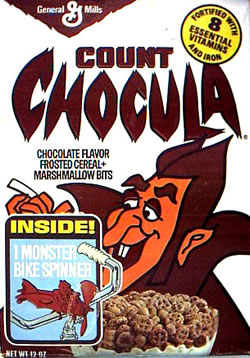
The vampire thus provides a perfect image for every enemy of the human race and even for closet identification. As a merchandise of symbolic trade in globalized cultures, s/he can be used equally to point at the shadowy existence of women in a patriarchal society, to serve as a propagandistic Western stereotype of the Balkans (see Tomislav Longinović: Vampires Like Us, 2002), or to sell cereals to kids. Because of this complexity, the bloodsucker has helped founding a whole thriving “academic (interpretation) industry”, as Ken Gelder stresses in Reading the Vampire (1995).
For Bram Stoker and his British contemporaries in the late 1800s, the vampire particularly made one thing possible: to speak about sexual and other taboos in disguise. Symptomatic is the scene where Dracula in the bedroom of Mina Harker is caught in flagrante, “his right clutching her neck and pressed it with his face to his chest. Her night shirt was spattered with blood, and blood flowed like a fine thread on the bare chest of the man.” Violent Victorian fellatio fantasies, or the reversal of breast-feeding? Overzealous literary scholars have even pointed out that Stoker’s Dracula acts here as it were as a negative Christ figure. They play on the cannibalistic heritage of the Christian Last Supper, where the faithful accept the flesh and blood of their Lord in order to follow him into his divinely undead existence. After all, Jesus is the most prominent revenant our tradition knows of.
So is it that what´s so fascinating about vampires? The anthropologist Norinne Dresser has written a whole book entitled American Vampires dedicated to popular culture and the human love for the blood-sucking undead. Her answer why Dracula has become the mythical success story of the millennium especially in the United States is that he is the all-American guy avant la lettre:
“The three major attractions of the vampire are totally compatible with American ideals of power, sex, and immortality. [..] It appears that American vampires are perfectly suited to this culture. They reflect those values which many Americans hold dear. They like to succeed. And they always get the girl.”
(c) Ruthner & DER STANDARD, 1997-2012
PS. The Independent has also come up with a list for the “10 best vampire holidays”; Transylvania is one destination among many others…
 delirium clemens
7 May 2011 at 04:21
I’ve constantly located your facts helpful. It’s exciting how that content is mentioned so frequently and yet so many malfunction to understanding the worth in not following which it states.
9 May 2011 at 22:07
I’m not sure where you’re getting your info, but great topic. I needs to spend some time learning much more or understanding more. Thanks for wonderful information I was looking for this information for my mission.
28 May 2011 at 20:16
Right on!
15 August 2011 at 17:17
Thank you for giving these good, healthy, explanatory and even fun tips on that topic.
xyxytodwhy.2011
24 May 2012 at 06:26
You actually make it seem so easy together with your presentation but I find this topic to be actually something which I think I would by no means understand. It sort of feels too complex and very vast for me. I am having a look ahead for your subsequent put up, I will try to get the hold of it!
26 May 2012 at 08:53
Excellent job. Highly recommended.
27 July 2012 at 08:18
Good article! We will be linking to this particularly great post on our site.
Keep up the great writing.
22 October 2012 at 16:32
Have you ever considered about adding a little
bit more than just your articles? I mean, what you say is important and all.
But just imagine if you added some great photos or videos to give
your posts more, “pop”! Your content is excellent
but with pics and clips, this blog could undeniably be one of the very best in its niche.
Superb blog!