WHO OWNS ‘1914’ ?
Nationalistic mud wrestling – or pan-European opportunity? The lobbying
is on for the WWI commemoration of Sarajevo in June 2014.
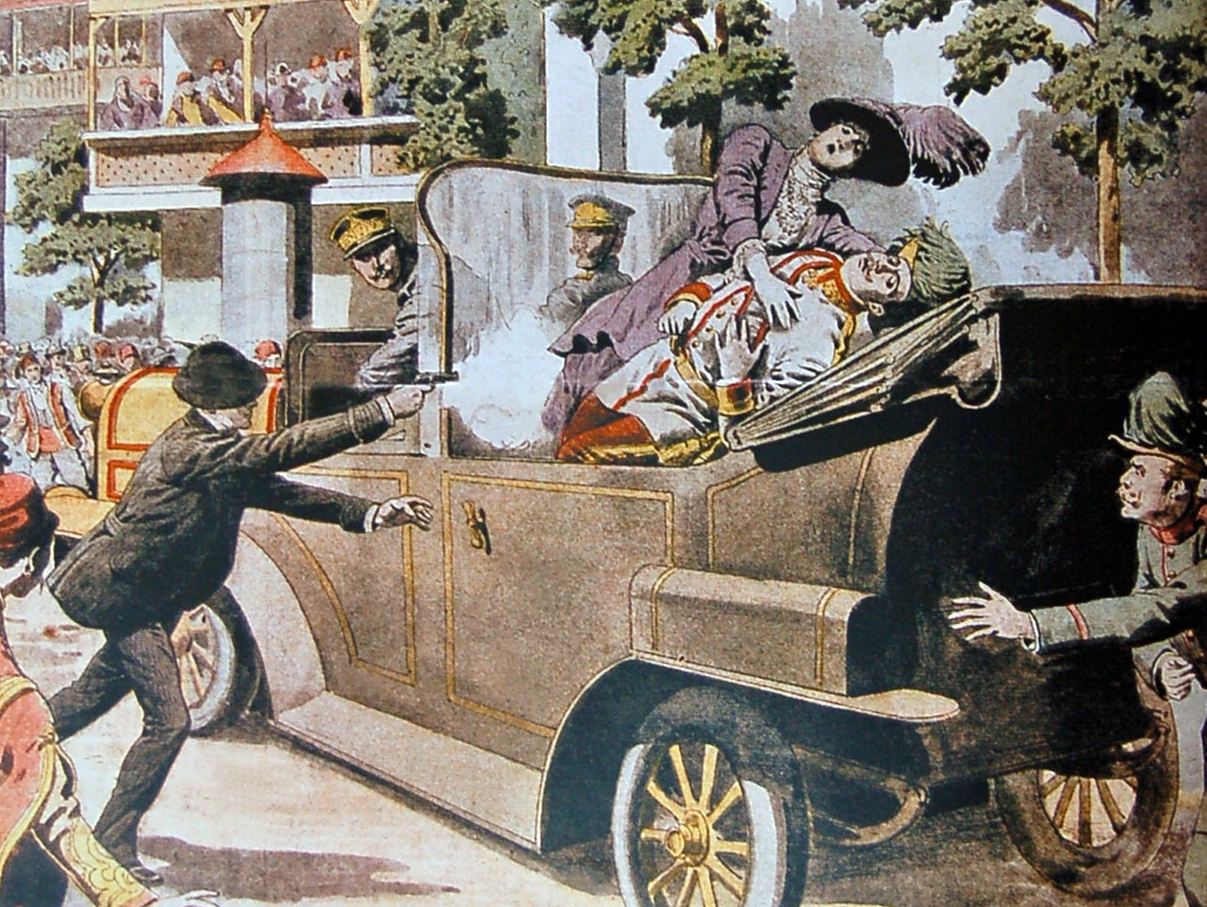
When he wanted to tease the local Yugoslavs (who still existed at the time), my Viennese classmate Wolfgang used to say on the soccer field: “you guys whacked our Emperor.” Around 1980, this was childish and, factually, not the quite right message to deliver about those so-called “Shots of Sarajevo” on 28 Juni 1914. In contrast, our official textbook narrative about the assassination of the Austrian crown prince, Archduke Franz Ferdinand, was: an act of terrorism by a misled student who had destroyed a good old past ungratefully, negligently opening the valve for the Great War catastrophe.
In Yugoslavia, however, the 28 June was stylized to a primal scene for the new state which had risen from the ruins of the Habsburg and Ottoman empires under Serbian leadership in 1918. In this context, the “Shots of Sarajevo” were declared a national rescue operation, as it were, and the gunman, Gavrilo Princip, a mythical hero, foreshadowing the deeds of Tito‘s partisans in World War II.
Since then much water has gone down the river Danube. Yugoslavs and their state don’t exist anymore, and in Sarajevo, much worse things than the shots of 1914 took place between 1992 and 1995: the longest military siege of a capital city in modern history, which cost about 10,000 lives, too many of them civilians and children. The killing, raping and looting besiegers were certainly not foreign invaders, but Serbian compatriots.
This also means that there is not one remembrance of 1914 in Bosnia-Herzegovina nowadays: whereas for the ones (namely most Bosniaks/Muslims and many Croats) the Austrian crownprince is the tragic hero, it is his assassin for the others (who are mainly Serbs).. But also the attitudes within Austrian society have slightly changed. Gradually the awareness prevails that the First World War opened the gates for the dictatorships and genocides of the Second, and that the role of the Austro-Hungarian monarchy was not as nice as Habsburg nostalgia (hallmark of our tourism industry!) and its fabricated saints – Franz Joseph, ‘Sisi’ & co. – would suggest.
However, the starting shots for the bloody and “short 20th century” (Eric Hobsbawm), for which Mr Princip was slowly dying in the Austro-Czech military prison Theresienstadt until 1918 (more than 30 years before it was to become a German concentration camp), are not not only the occasion for a little Remembrance Day for diehard Habsburg nostalgics. Europe’s best heads are hanging out in Sarajevo again, showering the city with welcomed and unwanted commemoration projects, like never again since the Bosnian War ended in 1995.
It was one of the last genius fits of the former French President Nicolas Sarkozy to seize the theme of “1914” in a cultural imperialism of sorts in order to make it a French event. A large amount of money was provided by France as well, but when the created foundation Sarajevo: Heart of Europe also received European funding, it was forced in 2013 to organize an international project competition, which is still not 100% completed. This whole procedure has apparently been misunderstood by some actors: being the co-organizer of an interdisciplinary congress on 1914 at the University of Sarajevo myself, I must confess that I have never been exposed to so much lobbying – and nobbling – by diplomats, politicians and colleagues alike who one way or another want to interfere and influence. The academic freedom is clearly at stake here.
One is curious to see how this whole historical soap opera is going to end in Sarajevo in 2014. Will the former war-faring parties of 1914-18 (and 1992-95) confront each other with duelling commemorative events, jealously trying not to let a minute of prime time TV too much to the ‘other side’? Or will they finally take their own lip service seriously and understand the memorial as a European opportunity: to bring the first skeletons of 1914 out of their history closets, discuss the subject matter fairly from multiple perspectives and then, with some respect, close the graves again to prevent new ghosts from emerging? Finally, 100 years later, coming to terms with the history of the First World War at a truly European level would be a small, but at least highly symbolic achievement for the crisis-ridden continent – not only for Bosnia-Herzegovina.
Original text © Ruthner & DIE PRESSE / LIDOVÉ NOVINY, 2013
Translation by the author. All rights reserved.


Leave a Reply