Undead anniversary
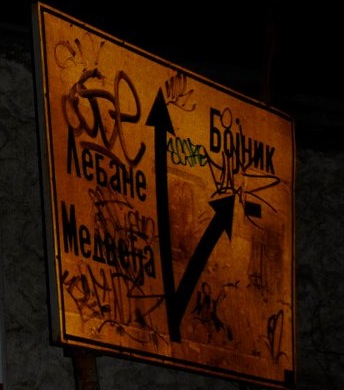
The European vampire is celebrating his/her/its birthday.
*
On a winter day 280 years ago, a creature came out of its dark graves in the Balkans, into the bright day of the “enlightened” European public: the vampire.
The story of its career as an undead popular myth of modernity does not start in Transylvania though, but in Medvedja, a village in southern Serbia. After the Turkish wars, the entire Western Balkans were occupied by Imperial Habsburg troops. There was famine, epidemics and the uncertainty of what the new masters would bring with them – until suddenly strange incidents occurred.
At the turn of 1731/32 the living inhabitants of Medvedja felt haunted by her dead. As more people died, a mass panic broke out. The Austrian army sent a fact-finding commission headed by the military doctor Johann Flückinger. They questioned the villagers, “which state then unanimously that about 5 years ago one local man called Arnot Paule broke his neck after falling from a hay wagon; he had announced during his lifetime often that he had been tormented by a Turkish vampire in Kosovo” (quote from Flückinger’s report).
Thus the epicenter of the haunting was found to be a farming accident and its victim which was obviously not quite dead and attacked the living. Flückinger’s commission is systematically: it lists the dead, opens graves and suspicious bodies that were later burned by local gypsies. This is the first time the word “vampire” pops up – which actually does not exist in any language of the Balkans.
It can be suspected that the Austrians who were dependent on the help of interpreters must have misunderstood something. (A culturally productive misunderstanding though, as it turns out.) Today the Viennese forensic scientist Christian Reiter believes that it was an anthrax epidemic which haunted Medvedja, as this is typical for post-war periods. The vampire is nothing more than a popular explanation for the disease, an outsider turned into a scapegoat which is made responsible for the disaster.
There had been earlier reports and rumors about the living dead in the Balkans – the difference is that after the Medvedja incident in 1732, the news spread like a wildfire across Europe. Journals reported the “vampyres” in both Vienna and Paris, and at the Easter book fair in Leipzig, there were several scholarly books written about them already by scientists from the surrounding German universities. Around the middle of the 18th Century a second wave of vampirism occurred in Habsburg-controlled territories, this time in Moravia and Silesia – until enlightened medicine finally closed the chapter with disapprovement.
However it took some time for the vampire to evolve from the dead Serbian peasant of enlightened case studies into the aristocratic Count Dracula of literature (Bram Stoker, 1897) – and still later, into Edward, the pale phantom boy toy of American teenage girls o our day. An end to this blood sucking terror is not in sight, even if the English TV critic AA Gill writes in his review of True Blood: “The moment you treat vampires and werewolves not as dark and sticky metaphors for the human condition, but just as another type of wildlife, then, contrarily, they lose all their power.” But as every child knows, the vampire is a shape shifter who can adapt to almost every environment as a true Darwinian superhero.
Medvedja has evolved as well. In Tito’s time it turned into a socialist small town. In the immediate vicinity, a thermal spa was built in the 1970s, promising alleviation to Yugoslav patients. The vampires, of course, no one wants to recall today, although 1732 might have been the only year in history where something was going on there. Except maybe 1999 when the Serbian army and separatists from neighboring Kosovo fought out their skirmishes in the area: something the locals would rather not like to recall either. “Europe” is still far away – so a Serbian vampire museum will probably have to wait a little bit longer. After all, the local health spa was able to build a new outdoor pool with U.S. reconstruction aid.
(c) Ruthner & Lidové noviny, 2012
>More photos from Medvedja
 delirium clemens
22 February 2012 at 21:40
kendrick perkins
you read the stuff on newest study they have been undertaking about this topic? feels like they may have certainly started to give it the exposure it warrants
22 February 2012 at 23:45
my thoughts…
Excellent web site. Plenty of useful info here. I am sending it to a few friends ans also sharing in delicious. And obviously, thanks for your effort!…
24 February 2012 at 07:25
Please let me know if you’re looking for a article author for your blog. You have some really great posts and I think I would be a good asset. If you ever want to take some of the load off, I’d love to write some articles for your blog in exchange for a link back to mine. Please shoot me an email if interested. Cheers!
27 February 2012 at 10:20
be my guest… although I don’t do too much shoes here – so what’s your other topics?;)
25 February 2012 at 00:36
This info is worth everyone’s attention. Where can I find out more?
27 February 2012 at 10:30
Trustworthy (academic) sources for vampire studies / research into historical Habsburg vampirism can be found @ the website http://www.kakanien.ac.at
29 February 2012 at 17:42
This is very uniquely written information. You must think like me or I you because our like views are very close. It’s a little scary. http://www.samsung1080phdtv.net/