The radiant heroes of Jáchymov
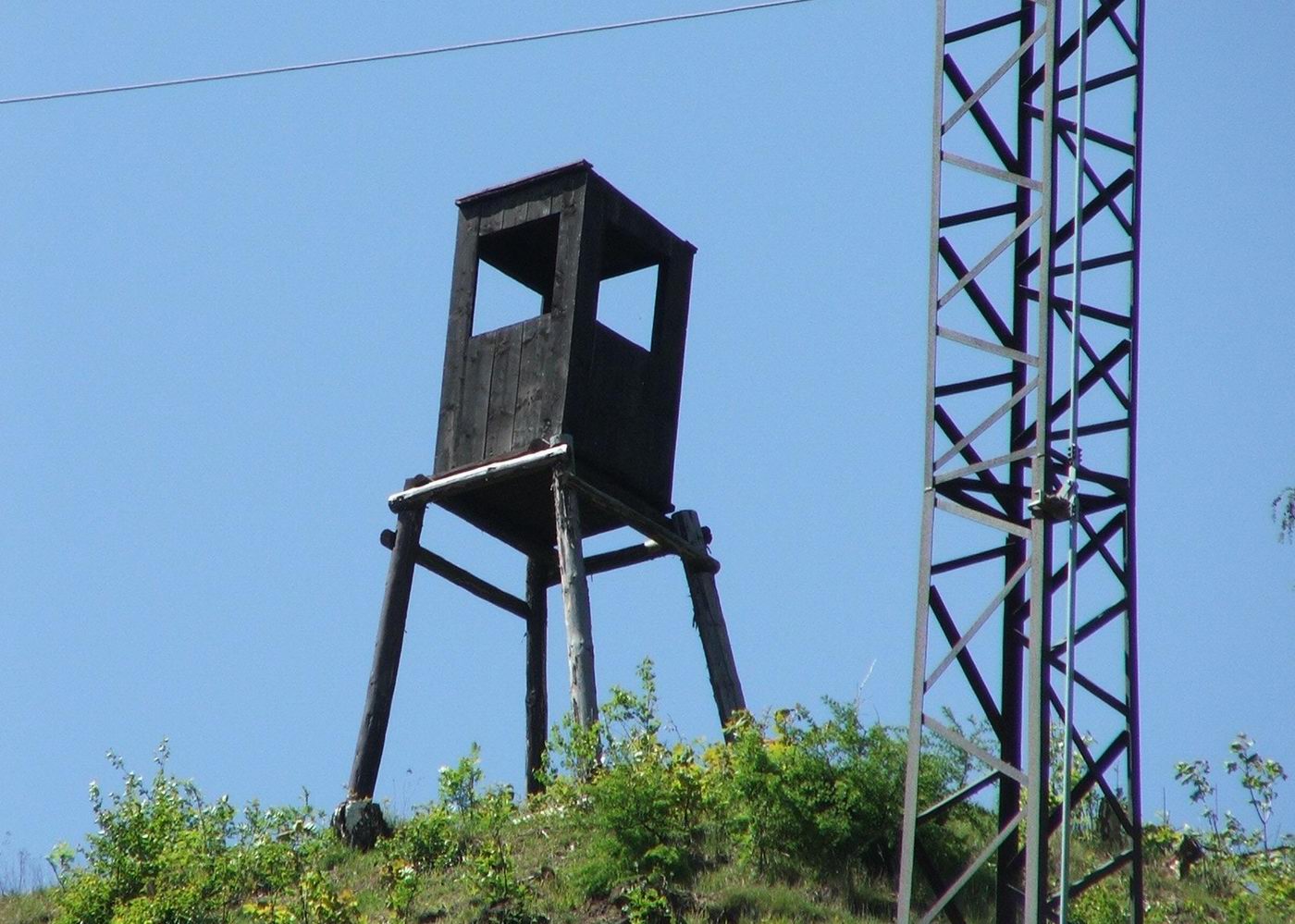
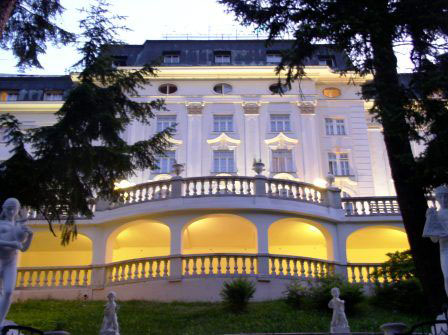
A new novel by Austrian author Josef Haslinger recalls the gloomy gulag past of a Bohemian health spa.
Jáchymov in the Bohemian mountains is one of Central Europe’s numerous fading spa resorts where the crumbling colonialist architecture of Habsburg fin-de-siècle has to face the health insurance design from the era of “Real Socialism“ and the nouveau riche swank post-1989. But Jáchymov is also the oldest radium spa on the continent and a monument of economic history under its German ex-name Sankt Joachimsthal, since its former silver mines were the birthplace of the Thaler in 1519: a currency which was not only used by, for example, Empress Maria Theresa and Scrooge McDuck, but also became the ancestor of the dollar. So much for the civilized chapters of its history. After 1945, Jáchymov had the bad luck to be the location of one of the largest uranium deposits in the Soviet-controlled parts of Europe.
As a consequence, a local variant of Stalinist prison camps was established here: places where the Communist regime of Czechoslovakia made German prisoners of war and later its perceived political opponents toil for the Russian big brother. Similar to Nazi concentration camps, the Bohemian gulags had a mustering ground called Apel Plac, and on the gates it said: “Through Work To Freedom.” The latter was rather hypothetical, since the average life expectancy was 42 years for prisoners. By then, their bodies had most likely become lethally contaminated by uranium dust through the respiratory system. This penal mining operation was only shut down in 1964. Nowadays the camps and the memorial site are among the few tourist attractions of Jáchymov aside from its beautiful landscape.
Among the most prominent prisoners of Jáchymov you can find Bohumil Modrý, probably the best ice hockey goalie in Europe before and after World War Two , and some of his teammates. Shortly before their departure to the World Cup in London (1950), they had fallen into disfavour in the eyes of those in power because of some critical remarks and alleged emigration plans. Modrý was sentenced to 15 years in prison by the biased judiciary system of President Klement Gottwald, but was pardoned after five. However, Jáchymov had also made him terminally ill. He died in 1963 from leukemia.
Almost 50 years later, the story of this tragic hockey hero is retold in the new novel Jáchymov by the Austrian writer Josef Haslinger. He was born in Zwettl, Lower Austria, not too far from the Czech border, in the year when the goalie was released. As Haslinger says, his book is meant as an attempt to correct the ignorance of the former “free West” for events behind the Iron Curtain. It is based on documents of Modrý’s daughter Blanka and talks with her.
Haslinger has thus written a truly (Central) European book: the story is very Czecho-Slovak with a brief touch of Nazi occupation. And in the narrative layout of the plot, the gloomy truth about Modrý is revealed by the (fictional) protagonist Anselm Findeisen, a publisher and runaway Ossi from the GDR holding an Austrian passport. The underlying issues are thus transnational, in the good sense of the word(ice hockey) as well as in the bad (totalitarianism). A border-crossing coverage of the past, as it were, as was already the case in Haslinger’s novel Vaterspiel (“Father Game”) which contrasted the Holocaust in Lithuania with Austrian politics of the present.
Despite (or because?) of his job as a professor of creative writing at the German Literature Institute in Leipzig, one must expect no literary fireworks from Haslinger, but rather a solidly written novel. In Austria, the author is namely regarded as one of the closest things to North American literature you can get: a production plant of faction-thrillers à la John Grisham & Co.
Unfortunately, the style of Jáchymov is not only sober, but poor in places, and the plot drags on at times. This is particularly true when it comes to those passages that are supposed to carry the hockey fans away (and yeah, there are plenty of them not only in Canada, but also in central Europe). As is the case with sex scenes, the representation of sports requires a high narrative skill to convince aesthetically. Haslinger’s novel, however, has more the sound of a textbook when he describes a hockey game: “The respect for each other was also noticeable in the first period of the new encounter. In the second period, the Czechs pressed and Vladimír Zábrodsky came first to score. His strength was the puck handling. But the Canadians equalized. In the final minute of the second third succeeded Gustav Bubník to score a new opener (…)” (translation mine).
The true merit of the novel, however, is to have exhumed a delicate and still repressed chapter of Central European history that should not be forgotten. Modrý was not only a great hockey player, he has also tried his whole life to share his knowledge in talks and texts. But why did it take an Austrian author to tell the story of Stalinist regime victims in the CSSR? Because Modrý never wanted to be a martyr for another ideology, but just a sportsman? In the Czech Republic and Slovakia there probably hundreds of similar cases – albeit without the glamour of the great hockey aces. Nevertheless, they deserve to be told as well.
(c) Ruthner & Lidové noviny, 2011
> Original (German) version of this blog entry
> Interview with Ladislav Koran, a Jáchymov survivor & fellow inmate of Modrý,
(c) Czech Radio/Český rozhlas, 2005


5 October 2011 at 11:46
Daily Post…
[…]beneath you will discover the link to some web pages that we feel it is best to visit[…]…
18 October 2011 at 16:00
After reading your blog post I browsed your website a bit and noticed you aren’t ranking nearly as well in Google as you could be. I possess a handful of blogs myself and I think you should take a look here: http://dominateseowithwordpress.com You’ll find it’s a very nice tool that can bring you a lot more visitors. Keep up the quality posts
30 October 2011 at 22:38
Free Backlink!…
We loved your website so much we added it to http://www.usbhubreview.net/sites-we-like-2. Just fill in the offer and your backlink is permanent….
7 September 2013 at 09:36
Would you mind if I quote a several of your blog posts as long as I
provide credit and sources back to your webpage: http://delirium-clemens.net/2011/10/02/the-radiant-heroes-of-jachymov/. I am going to aslo make sure to give you the proper anchortext link
using your blog title: The radiant heroes of Jáchymov | delirium clemens.
Be sure to let me know if this is okay with you. Thanks alot
🙂
7 September 2013 at 22:49
Thanks, be my guest 😎